Chives
Allium schoenoprasum
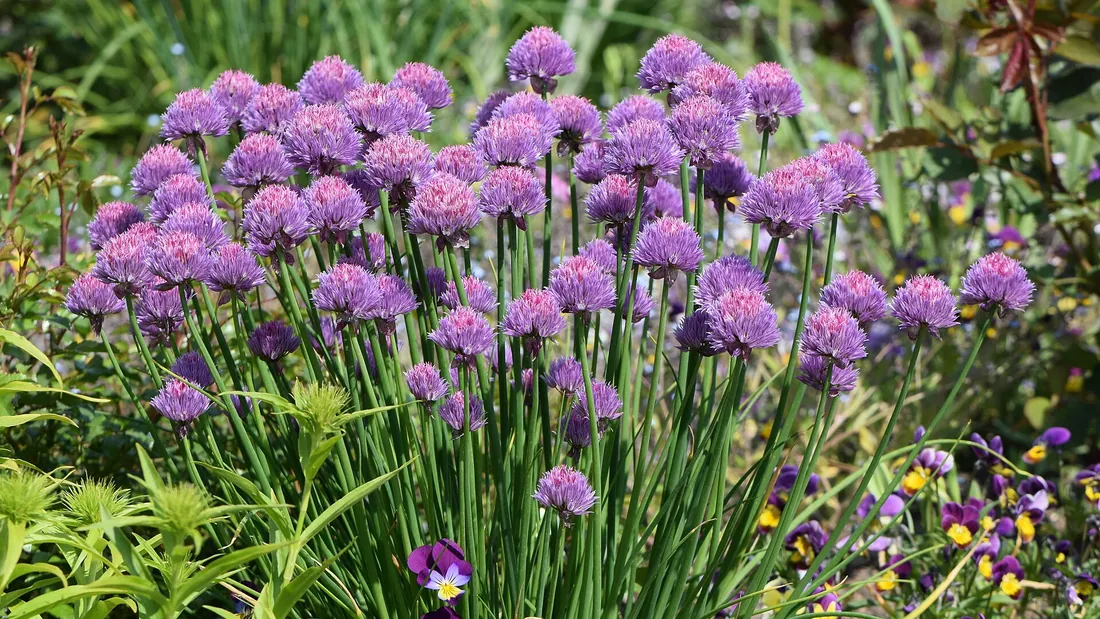

Chives (Allium schoenoprasum) are a small perennial of the onion family, with fine hollow stems tasting mildly of garlic and shallot. They are the faithful herb par excellence: perfectly hardy down to severe cold, they spend the winter outdoors without protection and come back each spring in an ever wider clump. Their edible pink pompom flowers delight the bees in late spring. A plant you set once and that accompanies the garden for years.
Light and exposure
Chives enjoy the sun and also make do with light partial shade. In the sun they give firmer, more fragrant stems, in partial shade they stay tender but a little less flavourful.
In a pot on a balcony or a windowsill, they simply ask for light and a little sun during the day. They are one of the easiest herbs to succeed with in a container, provided you do not let them dry out.
Watering
Chives like cool, steady soil. Water without excess but without letting the earth dry out, especially in summer when a lack of water makes the stems yellow and harden.
In a pot, the soil dries quickly and calls for more frequent watering. Chives that yellow at the leaf tips in high summer are most often thirsty. Cut the clump quite short then and water, and it comes back with fresh, tender stems.
Soil and repotting
Ordinary garden soil, loose and enriched with compost, is largely enough for them. They prefer soil that stays cool but well drained, they do not like standing water in winter.
In a pot, a quality vegetable compost with good drainage at the bottom does the job. Every two or three years the clump wears out and thins in the centre: that is the sign it needs dividing and replanting in soil freshened with compost.
Temperature and humidity
Chives are a fully hardy perennial: the species is recognised down to USDA zone 3, able to take continental cold of around -35 °C. They cope just as well with mild, damp winters and their alternating freeze and thaw, often harder on plants than steady dry cold. In a temperate climate winter is therefore never a real risk for them, and no protection is needed. The foliage disappears in autumn, the rootstock spends the winter dormant underground, then starts up again at the first mild spells of late winter.
They are in fact one of the very first herbs to reappear, often several weeks before the rest of the vegetable garden. This hardiness makes them a mainstay of the garden: once established, they return each year, a little wider, without your having to worry about them. The cold does not kill them, it is even useful: a well marked winter rest brings a more vigorous restart and a more generous flowering the following season than chives that never really stopped growing, grown indoors all year for instance. At the other end of the thermometer, lasting heat above about 30 °C sends them semi-dormant: they slow down, their stems harden, and they pick up again once the temperature falls.
Pruning and upkeep
Harvest by cutting the stems at the base, two or three centimetres from the ground, rather than pinching the tips. The clump then comes back clean and vigorous. Always cut a good handful at once, this stimulates regrowth better than nibbling leaf by leaf.
During the season, a clean cut of the whole clump regenerates it: the stems that grow back are more tender. The flowers are edible, but if you want to favour the foliage, cut the flowering stems, because once it has run to flower the plant slows the production of tender leaves.
Pests and diseases
Chives are little prone to disease. The main trouble in a damp climate is leek rust, Puccinia allii, which also affects the other alliums: small orange pustules appear on the stems. Cut and remove the affected parts, the regrowth is generally healthy.
Powdery mildew can also felt the leaves white in mild, damp weather. The onion fly sometimes attacks the rootstock. On the whole, a regularly divided clump, airy and not over-watered, stays vigorous and keeps the problems at bay.
Propagation
The simplest and quickest way to propagate chives is by clump division. In spring or early autumn, dig up an established clump, separate it into several splits of a few bulblets each and replant them at once. Each split forms a new clump.
Sowing is possible but slower: sow in spring, germination takes two to three weeks and it takes a whole season to get a usable clump. Division remains the handiest route, all the more so as it also rejuvenates the old plants that thin out.
Climate and hardiness
Where and in which climate it thrives
Chives are among the hardiest perennial herbs there are: the species is rated down to USDA zone 3, meaning winter lows of around -35 °C, and it comes through the winter without the slightest protection anywhere the ground freezes. The foliage melts away at the first hard frosts, the rootstock sleeps underground, then reappears among the very first plants as soon as late winter turns mild. A late frost scorches a few leaf tips at worst and never harms the clump. That cold rest is not merely endured, it is useful: without a clearly marked dormant period, chives flower sparsely and start the following season less vigorously.
In a mild, damp oceanic climate the danger comes not from frost but from water standing all winter and rotting the bulblets: on heavy soil, plant the clump slightly raised. In a continental climate with a cold, dry winter the plant needs nothing at all, but the short summer moves the whole calendar forward: divide early, so the pieces have time to root before the hard cold. Under a hot, dry summer, above about 30 °C, chives pause: the stems harden and yellow, and a hard cut back followed by a mulch and a good watering restarts them as soon as the heat drops. In a Mediterranean or subtropical climate with a mild winter they stay green all year but wear out faster and thin in the centre: divide them every two years rather than every three. In a pot behind a bright window they still give fine stems through the cold season, provided you do not let them dry out in the hot air of a heated room.
Growing chives?
Green Hub keeps a dated history of your own plant: its photos, its progress, its repottings. An AI answers about yours specifically, not a generic sheet, for free.
Identify my plantMonth-by-month care calendar
| January | The clump sleeps underground. Nothing to do outdoors. A pot brought into the light can still supply a few stems. |
|---|---|
| February | First signs of recovery in mild weather, chives are among the first to reappear. Clean up the old residue. |
| March | Clear start-up of the clump. A good moment to divide established plants and replant the splits. Sowing is possible. |
| April | Fine spring growth. First harvests by cutting the stems at the base. Water if the spring is dry. |
| May | Flowering in pink pompoms, edible and much visited by the bees. Cut the flowers if you favour the foliage. |
| June | Full production. Cut whole clumps right down to relaunch tender stems. Water regularly. |
| July | Continuous harvest. In strong heat, a clump that yellows is thirsty: cut it back and water, and it comes back tender. |
| August | The picking carries on. Watch for orange rust in damp weather and cut the affected parts. |
| September | Renewed vigour with the coolness. A good second moment to divide and replant the tired clumps. |
| October | The foliage begins to decline. Last cuts. Bring a pot in to keep harvesting this winter. |
| November | The foliage melts away with the cold. The rootstock goes to rest. Nothing to protect, chives are hardy. |
| December | Full winter rest outdoors. Pick from a pot brought into the light if you have brought one in. |
Green Hub tips
- Cut the stems at the base, never the tip: a clump cut back cleanly comes back more tender than nibbling leaf by leaf.
- Divide the clump every two or three years in spring. It thins in the centre as it ages, and division rejuvenates it.
- The pink flowers are edible and treat the bees, but cut them off if you mainly want tender foliage.
- Bring a pot onto a windowsill in autumn: chives still give a few stems there in the depths of winter.
Related species
Clivia
Clivia miniata
The clivia (Clivia miniata) is a sturdy, generous houseplant from the undergrowth of South Africa. Its broad strap-like…
Daffodil
Narcissus
The daffodil (Narcissus) is the first big signal of spring in the garden. Long before the tulips, its yellow trumpets…
Garlic
Allium sativum
Garlic (Allium sativum) is one of the easiest vegetables in a kitchen garden, provided you grasp two things. You don’t…
Leek
Allium porrum
The leek (Allium porrum) is the winter vegetable par excellence. Very hardy, it stands in the ground all winter and is…
Onion
Allium cepa
The onion (Allium cepa) is a hardy, no-fuss bulb vegetable, one of the easiest crops to succeed with in a vegetable…
Shallot
Allium ascalonicum
The shallot (Allium ascalonicum) is a classic of the vegetable garden, a cousin of the onion but with a finer, milder…
The guides that mention it
Easy herbs to grow
Thyme, rosemary, basil, parsley, mint: which ones make it through the winter outdoors, which ones self-seed, and how to…
Gardening on a Balcony or Terrace: Vegetables and Flowers in Pots
Weight, wind, exposure: what really changes when you garden up high instead of in open ground, and how to choose your…
Which Garden Flowers Are Edible, and How to Cook With Them
From flower bed to plate: the flowers that are genuinely edible, the harvesting method that preserves their flavour,…
Accessible Gardening: Growing at Back Height, Without Bending
Adjusting the height of your crops and the width of your paths so you can keep gardening for years, without straining…
Updated on
How this sheet is written
Written for Green Hub with the help of language models, then reviewed. It offers gardening guidance, not professional advice: if you are unsure whether a plant is toxic to a child or an animal, ask a vet, a doctor or your national poison centre.