Geranium
Pelargonium
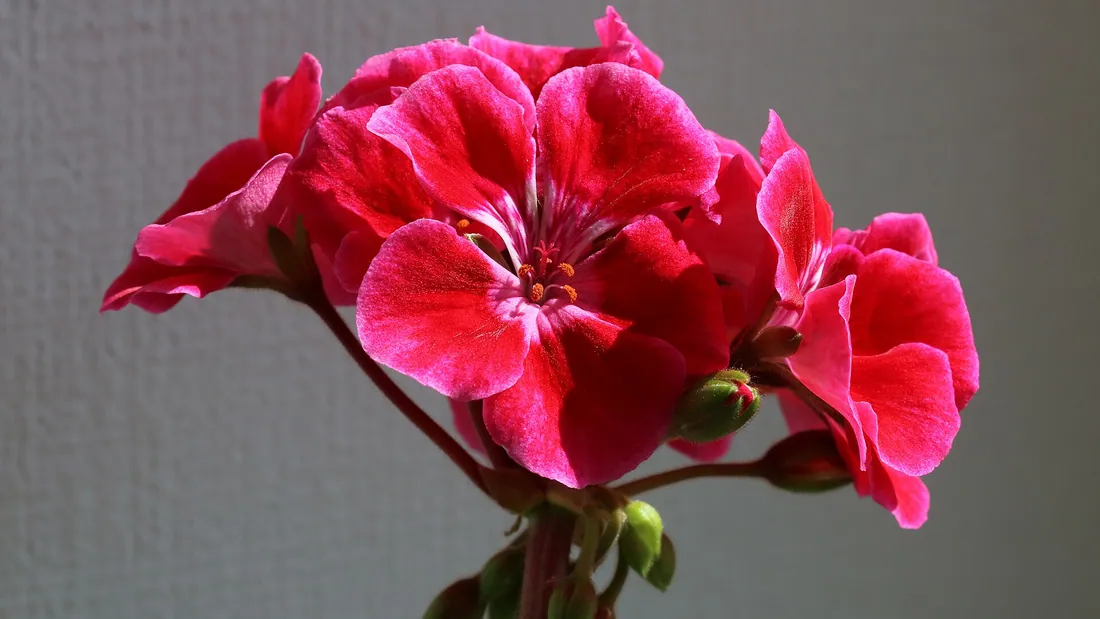

What is commonly called a balcony geranium is actually a pelargonium, a plant from South Africa, not to be confused with the true hardy perennial geraniums of the garden. It is a frost-tender summer plant, perennial outdoors only in a frost-free climate: anywhere else it does not survive the winter outside. Everything comes down to two moves, putting the pots out once the last frosts have passed and nights have climbed back above 8 to 10 degrees, and bringing them back under frost-free shelter in autumn to keep them from one year to the next.
Light and exposure
The pelargonium wants full sun. The more it gets, the more it flowers: aim for at least six hours of direct sun a day, a balcony that catches the midday and afternoon sun, a window box against a pale wall that reflects the heat. In shade it grows leggy, turns green and flowers poorly.
It is a plant for pots and window boxes above all, which is convenient anywhere it will have to come indoors before the frosts. In open ground it works too, but then give it the warmest and sunniest bed, and still take it in before the frosts if you want to keep it. Under a scorching summer, light shade during the hottest hours keeps the flowers from burning and costs nothing in flowering.
Watering
Water regularly in summer, but let the surface of the compost dry out a little between waterings. The pelargonium copes better with a slight shortage than with an excess: a permanently waterlogged substrate rots the base. In hot weather a window box may need water every day; in overcast weather, space it out.
Water at the base, not on the flowers or foliage, and empty the saucers after rain. Water standing at the bottom of the pot is enemy number one, especially in late season when the nights turn cool and the compost dries slowly.
Soil and repotting
It needs a free-draining compost, never heavy or waterlogged. A planting compost for geraniums, lightened with a handful of sand or perlite, does the job very well. At the bottom of the pot, a layer of clay pebbles or gravel keeps the roots from sitting in water.
Repot or set out the window boxes as spring arrives, in a container with drainage holes. Do not crowd the plants: a pelargonium given room spreads and flowers more. In a window box, allow one plant every twenty to twenty-five centimetres.
Temperature and humidity
This is the critical point. The pelargonium is frost-tender: it already suffers around 3 or 4 degrees and a frost kills it outright. It is genuinely perennial outdoors only in USDA zones 10 and 11. It thrives between 15 and 25 degrees, in the open air, right through the growing season. Never put the pots out while night frost is still possible, a single night scorches the foliage: wait until nights settle above 8 to 10 degrees.
Above 30 degrees it suspends its flowering without being ill for all that, and takes it up again as soon as the heat drops. As for humidity, it prefers dry, well-ventilated air to a stuffy atmosphere. A window box crammed against a wall, poorly ventilated in damp weather, encourages disease. Let the air circulate between the plants and avoid wetting the foliage in the evening.
Pruning and upkeep
Remove faded flowers very regularly, snapping or cutting the flower stem at its base. This simple gesture keeps the flowering going continuously: a pelargonium that is kept clean flowers from late spring right up to the first frosts, a neglected pelargonium exhausts itself making seed and slows down.
Pinch the young stems at the start of the season to get bushy plants rather than lanky ones. Feed throughout the flowering period: a special fertiliser for flowering plants every eight to fifteen days in full season. Abundant flowering means high demand, a poorly fed pelargonium yellows and flowers less.
Pests and diseases
In a damp climate, two diseases keep coming back. Grey mould, a grey felting on flowers and leaves in mild, stuffy weather, settles on the faded parts left lying around. Pelargonium rust marks the underside of the leaves with small brown powdery rings, especially in a damp late summer. In both cases: ventilate, remove the affected parts, do not wet the foliage.
Excess water remains the real danger. Waterlogged compost rots the collar and the base, and the plant collapses all at once. As for pests, watch out for aphids as growth restarts in spring and the pelargonium caterpillar, the leaf roller, which bores into the buds and hollows out the stems.
Propagation
Stem cuttings in late summer are astonishingly easy, and it is the best way to renew your plants for free. Take a non-flowering stem ten centimetres long, remove the lower leaves, let the cut dry for an hour or two, then insert it into a light, barely moist compost. Rooting takes two to three weeks.
You can also sow under warmth at the end of winter, but it is slow and the young plants only flower late. For most gardeners, the late summer cutting remains the royal road: it gives plants ready to take off again the following spring.
Toxicity
Barely toxic to humans, with no real danger on contact. It is however toxic to dogs and cats: eating leaves or stems causes vomiting, loss of appetite and lethargy. Keep the pots out of reach of a pet that nibbles.
Climate and hardiness
Where and in which climate it thrives
The pelargonium is frost-tender, genuinely perennial outdoors only in USDA zones 10 and 11: it already suffers around 3 or 4 degrees and the first frost kills it outright. Everywhere else it is grown as a summer plant that gets brought in, or as an annual replaced every year.
Where winters never freeze, in a mild Mediterranean, subtropical or island climate, it stays outside all year and turns into a woody subshrub over a metre tall, to be cut back annually so it does not go bare at the base. That is in fact its home climate: it comes from the Cape region of South Africa, where summers are dry and winters mild and rainy. Under a climate with freezing winters, everything rests on two moves: putting the pots out once the last frosts have passed, when nights no longer drop below 8 to 10 degrees, and bringing them in before the first autumn frosts, into a cool, bright, frost-free room between 5 and 10 degrees, stems cut back by half and watering reduced to a minimum.
Its comfort range is 15 to 25 degrees. Above 30 degrees it stalls: it goes on living but suspends its flowering and picks it up again as soon as the heat drops, which puzzles gardeners in very hot summers, who think it is sick. In a cool wet summer or in very humid air, it is not cold that bothers it but stagnant damp: grey mould and rust move in, and a substrate that never dries out rots the collar.
Growing geranium?
Green Hub keeps a dated history of your own plant: its photos, its progress, its repottings. An AI answers about yours specifically, not a generic sheet, for free.
Identify my plantMonth-by-month care calendar
| January | The plants overwinter in the cool and the light, between 5 and 10 degrees. Water barely, once in a while, just so the compost does not dry out completely. |
|---|---|
| February | Still under shelter. You can start sowing under warmth if you feel like it, but it is slow. Check the overwintered plants for any rot. |
| March | A gentle restart. Repot the overwintered plants in fresh compost, gradually increase watering and move them closer to the light. |
| April | Cut back and clean up the plants, pinch to encourage branching. Start hardening off to the mild days, but bring them in at night: it still freezes overnight. |
| May | Harden off the plants outside during the day. Definitive planting in pots and window boxes only once all risk of night frost has gone. |
| June | Full growth and first flowers. Remove faded flowers, water regularly at the base and start the flowering-plant fertiliser. |
| July | Generous flowering. Fertiliser every eight to fifteen days, daily watering in hot weather. Remove faded flowers as they appear. |
| August | The season is in full swing. This is the time to take a few stem cuttings to renew your plants for free. Watch out for rust and grey mould in damp weather. |
| September | Flowering continues. Gradually reduce the fertiliser. Remove damaged leaves and flowers to limit late-summer diseases. |
| October | Last flowers. Before the first frosts, bring the pots into a cool, frost-free place, cut the stems back by half and greatly reduce watering. |
| November | Overwintering under way. The plants are under shelter, bright and cool. Water very little and remove any yellowed leaf to prevent rot. |
| December | Complete rest in the cool. Check the state of the overwintered plants from time to time and note the varieties to propagate next season. |
Green Hub tips
- Never put pelargoniums out while a night frost is still possible. A single night is enough to scorch all the foliage: wait until nights hold above 8 to 10 degrees.
- Bring the pots into a frost-free place in autumn, in a cool, bright room between 5 and 10 degrees, cut back by half and barely watered: they will start again in spring.
- Remove faded flowers without delay, it is the gesture that keeps the flowering going and makes it last from late spring right up to the first frosts.
- Take cuttings at the end of summer to renew your plants for free: a ten-centimetre stem roots in two to three weeks in a light compost.
Related species
Althea
Hibiscus syriacus
Althea (Hibiscus syriacus) is a hardy deciduous garden shrub that flowers when every other one has finished, from…
Beech
Fagus sylvatica
Beech (Fagus sylvatica) is the most common broadleaf tree in the temperate forests of Europe, just as happy standing…
Begonia
Begonia
Begonia is the star summer flower of window boxes, hanging baskets and shady borders. Hundreds of hybrids exist, but…
Box
Buxus sempervirens
Box (Buxus sempervirens) is an evergreen shrub that has been clipped into balls, cones and low borders in formal…
Butterfly bush
Buddleja davidii
Buddleia (Buddleja davidii), better known as the butterfly bush, is a nearly indestructible shrub that has taken over…
Cherry laurel
Prunus laurocerasus
Cherry laurel (Prunus laurocerasus) is the most widely planted evergreen hedging shrub in temperate gardens, and it is…
The guides that mention it
Perennial Flowers: Choosing, Planting and Blooming Without a Gap All Season
What genuinely comes back year after year, how to read hardiness by zone rather than by promise, and how to string…
Overwintering your plants without losing them
Clivia, lavender, verbena, geranium, olive: which to bring indoors, which to protect outside, which to leave to face…
Repotting your plants and choosing the right potting mix
The right moment, the right technique and the right substrate for each plant, so you can repot without rotting the…
Gardening on a Balcony or Terrace: Vegetables and Flowers in Pots
Weight, wind, exposure: what really changes when you garden up high instead of in open ground, and how to choose your…
Dividing, Taking Cuttings, Sowing: Multiplying Your Plants for Free
Dividing a perennial, taking cuttings from a shrub, or sowing seed straight from the garden: the techniques that fill a…
Updated on
How this sheet is written
Written for Green Hub with the help of language models, then reviewed. It offers gardening guidance, not professional advice: if you are unsure whether a plant is toxic to a child or an animal, ask a vet, a doctor or your national poison centre.