Lemon verbena
Aloysia citriodora
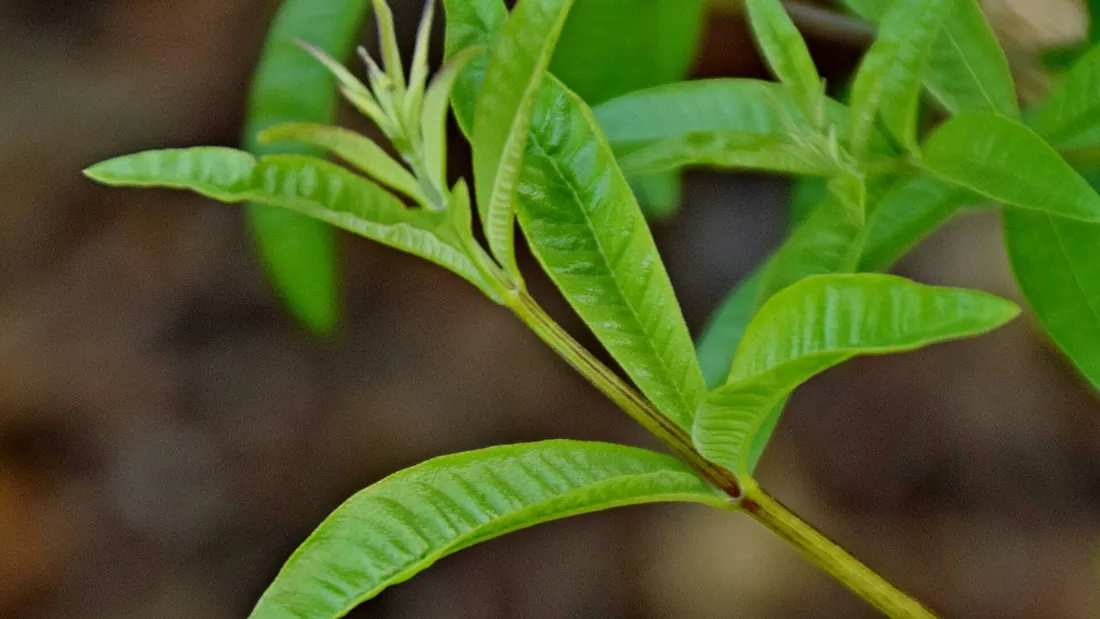

Lemon verbena (Aloysia citriodora) is a shrub whose leaves give off a clean, intense lemon scent, the one in an evening herbal tea. Nothing to do with common vervain or with bedding verbenas: it is a true little woody shrub, native to South America, and above all a tender one. Wherever winter drops well below -5 °C it freezes in open ground. The rule that changes everything is simple: grow it in a large pot that you overwinter in a frost-free spot. In winter it loses all its leaves, that is a normal rest and not a sign of death, and you must not throw it out.
Light and exposure
Lemon verbena wants full sun, no compromise. It is in the sun that its leaves load up with essential oils and develop that so distinct lemon scent. Give it the warmest and brightest spot in the garden or on the terrace, against a wall that holds the heat if possible.
A corner that is too shady gives a weak plant, with soft stems and a disappointing scent. In a pot, turn the container from time to time so the shrub develops evenly, and choose from the outset the sunniest position you can offer it over the growing season.
Watering
In full growth, from spring to autumn, verbena likes regular watering but never waterlogged soil. Let the top few centimetres of the substrate dry between waterings, then water generously. In a pot and in strong heat, that can mean water every two or three days, more during a real hot spell.
In winter, everything changes. Once the leaves have fallen and the plant is at rest under shelter, cut watering back very sharply: the substrate must stay just barely moist, almost dry. A rootball soaked with water on a leafless, cool plant means guaranteed root rot. It is the most common mistake of overwintering.
Soil and repotting
Lemon verbena needs a light and above all very well-drained soil. A mix of quality potting soil lightened with coarse sand or perlite suits it well in a pot. It dreads stagnant moisture around the collar and roots, even more under a rainy climate.
In open ground, in the rare cases where the gamble is taken, a heavy, clayey soil is frankly unfavourable to it. You then have to lighten the planting hole generously with sand and compost, and play a raised position so the water runs off. Drainage comes before the richness of the soil.
Temperature and humidity
This is the point that governs its whole cultivation. Lemon verbena is frost-tender: it takes a few short, light frosts, of the order of minus 5 degrees on a well-established, mulched specimen, but a long, damp cold season gets the better of it in open ground anywhere frost really settles in. The combination of cold plus damp is far more deadly than dry cold.
The solution that works is overwintering frost-free, between 2 and 10 degrees: an unheated conservatory, a bright garage, a cool stairwell, a cold greenhouse. It spends the winter leafless, dormant, and comes back from its stems or from the stump in spring. No need to heat it, it is the rest in the cool that puts it in reserve for the following season.
Pruning and upkeep
The main pruning is done in spring, and not in autumn. Wait until the new shoots come away clearly, often several weeks after the last frosts, to see which wood has restarted and which is dead. You then prune firmly above the young shoots, removing all the dry, brittle wood, to restore a compact shape and force branching.
Resist the urge to prune in autumn. A plant cut back before winter faces the cold weakened, and you do not yet know which stems will have held. A cleaning cut at the right moment, as growth restarts, gives a dense shrub, generous in fragrant leaves. The fresh trimmings can, moreover, be kept to flavour an infusion.
Pests and diseases
Well grown, in the sun and in drained soil, lemon verbena is little prone to disease. Its number one enemy is not a fungus but excess winter water: root and collar rot, caused by a soaked substrate on a resting plant. Prevention lies in watering almost cut off during dormancy and a pot that never sits in its saucer.
On the pest side, watch for red spider mites during an overwintering in a dry, warm atmosphere, they sting the foliage and grey it, as well as aphids and sometimes scale insects on the plants brought in. Good airing of the overwintering room and a regular inspection of the undersides of the leaves are generally enough to keep them in check.
Propagation
Cuttings are the prime method, and they are quite easy in summer. In the heart of summer, once the season’s stems begin to harden at the base, take cuttings of semi-ripe wood ten to fifteen centimetres long, remove the lower leaves, and plant them in a light, moist mix, under cover beneath a bag or a mini-greenhouse to keep the air moist. Rooting takes a few weeks in the warmth.
You can also try the cutting in a glass of water, less reliable but fun to follow. Sowing exists but stays slow and uncertain, leave it to the nurserymen. A cutting that succeeds in summer ideally spends its first winter well protected from frost, in a pot, because a young plant is even more fragile than an established one.
Climate and hardiness
Where and in which climate it thrives
Lemon verbena is a subtropical shrub from South America, and its hardiness governs the whole way it is grown: a well-established, mulched specimen takes a few hours at -5 °C, but a harder or longer frost, below -7 to -8 °C depending on the source, destroys the top growth. It therefore stays outdoors all year from USDA zone 9 upwards; in zone 8 it only holds in a truly sheltered spot on dry ground, the rootstock coming away from the base in spring under a thick mulch. Colder than that, it is a pot plant to be overwintered.
Under a mild oceanic climate with a long, soaked cold season, it is the combination of cold plus damp, far more than the cold alone, that gets the better of it in open ground. The method that succeeds is then the large container: full sun outdoors all through the warm season, then brought under cover as soon as serious frosts loom. Under a continental climate with a properly cold winter, overwintering under cover is not an option but an obligation, and it is all the easier because the air is dry. Under a Mediterranean or subtropical climate it stays out all year and makes a shrub two to three metres tall; the point to watch becomes watering in full heat and a soil that really drains.
Overwintering is done cool and bright, between 2 and 10 °C: an unheated conservatory, a bright garage, a cool stairwell, a cold greenhouse. It loses all its leaves, which is normal: a bare plant with no apparent life is not dead, it is sleeping. Scratch the bark of a stem lightly to check for the green beneath before concluding anything. You water almost none during this rest, because it is the water, not the moderate cold of the room, that kills it, and the restart is often late, several weeks after the last frosts. If you try open ground in a borderline region, back it against a wall that holds the heat, mulch thickly at the onset of the cold season, and always keep a cutting warm in a pot as insurance. Do not confuse this shrubby verbena with common vervain, Verbena officinalis, a quite different hardy medicinal plant, nor with the ornamental verbenas sold in garden centres, which are bedding annuals with no link to the lemon scent.
Growing lemon verbena?
Green Hub keeps a dated history of your own plant: its photos, its progress, its repottings. An AI answers about yours specifically, not a generic sheet, for free.
Identify my plantMonth-by-month care calendar
| January | The plant sleeps frost-free, leafless. Check that the substrate is not soaked, water barely, just so the rootball does not dry out completely. Air the room in mild weather. |
|---|---|
| February | Still at rest. Inspect the undersides of any remaining leaves and the stems to spot scale insects or red spider mites. Patience, it restarts late in the season. |
| March | First possible signs of waking depending on the mildness. Resume watering very gradually. Do not prune yet, wait to see the living wood. |
| April | The restart becomes clearer, the buds show on the healthy stems. Repot if needed into a draining substrate. Put the plant out during the day in fine weather to harden it, bring it in at night, it still frosts. |
| May | Cleaning cut once the new shoots are well away: remove all the dead wood above the young branches. Setting out in full sun only once the last frosts have passed. |
| June | Full growth. Water regularly without soaking, in the sun. It is the right time to take cuttings of semi-ripe stems and harvest the first fragrant leaves. |
| July | Generous harvest of leaves for teas and cooking, pick in the morning when the scent is strongest. Continue taking cuttings. Watch the watering in the pot in strong heat. |
| August | The plant gives its full scent. Keep harvesting, it stimulates new tender shoots. Dry leaves in the shade for winter. Watch for aphids. |
| September | Last fine harvests. Gradually reduce watering as the nights cool. Finish drying leaves for the winter store. |
| October | Growth slows, the foliage may start to yellow. Prepare the overwintering room. Bring the plant in before the first real frosts if they come early. |
| November | Overwintering: bring the pot in frost-free, between 2 and 10 degrees, in a cool and if possible bright spot. Leaf drop is normal, do not worry. Cut watering almost off. |
| December | Complete rest under shelter. Check from time to time that the substrate is neither soaked nor completely dry. Nothing else to do, the plant is rebuilding its strength for spring. |
Green Hub tips
- In winter, a bare, leafless verbena is not dead: it is sleeping. Scratch a stem, if it is green underneath, it is alive and will restart in spring.
- During overwintering, the enemy is water, not the moderate cold. Water barely, a soaked substrate on a resting plant rots the roots for sure.
- Prune only in spring, once the young shoots are away. You will then know which wood is alive and which to cut, and you will not weaken the plant before winter.
- Pick the leaves in the morning, in the sun, when their lemon scent is most concentrated. Dried in the shade, they keep their aroma for winter teas.
- Do not confuse it with common vervain or with the annual bedding verbenas: only this South American shrub carries that true lemon scent.
Related species
Basil
Ocimum basilicum
Basil (Ocimum basilicum) is an annual, cold-sensitive herb that comes from the warm regions of Asia. It is a summer…
Bay laurel
Laurus nobilis
Bay laurel (Laurus nobilis) is the only true culinary bay, the one whose leaf you drop into sauces and stocks. Take…
Chervil
Anthriscus cerefolium
Chervil (Anthriscus cerefolium) is a fine annual herb with finely cut foliage and a delicate, slightly aniseed flavour.…
Chives
Allium schoenoprasum
Chives (Allium schoenoprasum) are a small perennial of the onion family, with fine hollow stems tasting mildly of…
Coriander
Coriandrum sativum
Coriander (Coriandrum sativum) is an annual herb grown for both its fresh leaves, with their pronounced flavour, and…
Dill
Anethum graveolens
Dill (Anethum graveolens) is an annual herb with a lacy outline, a cousin of the carrot and fennel. It is a warm-season…
The guides that mention it
Easy herbs to grow
Thyme, rosemary, basil, parsley, mint: which ones make it through the winter outdoors, which ones self-seed, and how to…
Overwintering your plants without losing them
Clivia, lavender, verbena, geranium, olive: which to bring indoors, which to protect outside, which to leave to face…
Gardening on a Balcony or Terrace: Vegetables and Flowers in Pots
Weight, wind, exposure: what really changes when you garden up high instead of in open ground, and how to choose your…
Wildflower Meadows and Beneficial Insects: Gardening for Biodiversity
Ladybirds, hoverflies, wild bees: how a wildflower meadow and a few simple habits turn an ordinary garden into a refuge…
Updated on
How this sheet is written
Written for Green Hub with the help of language models, then reviewed. It offers gardening guidance, not professional advice: if you are unsure whether a plant is toxic to a child or an animal, ask a vet, a doctor or your national poison centre.