Rose
Rosa
.jpg)
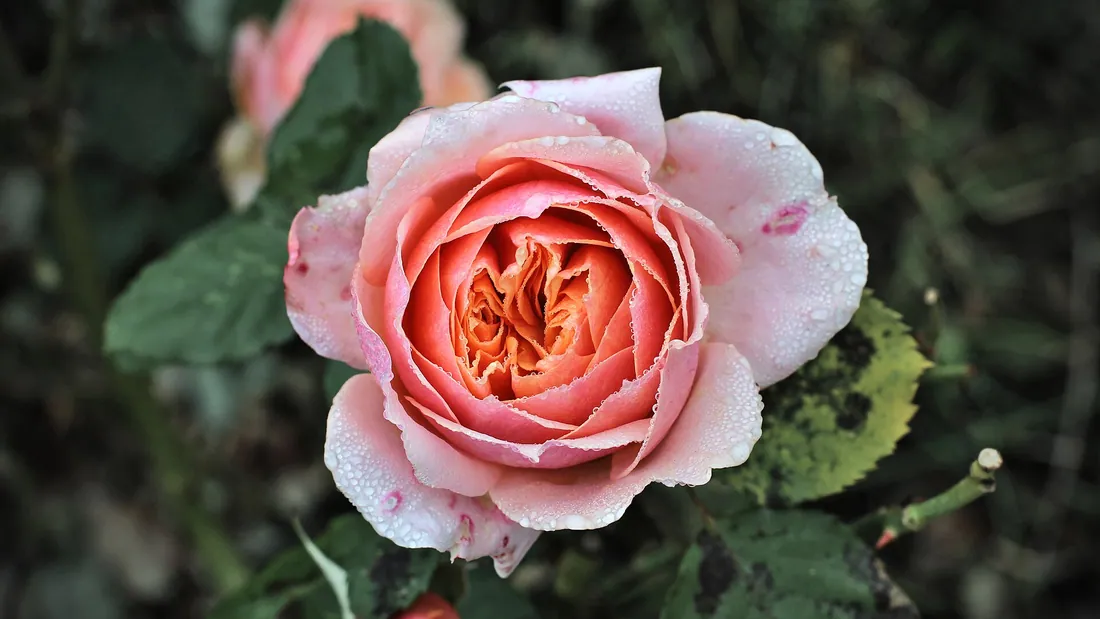
The rose (Rosa) is a hardy flowering shrub that overwinters outdoors without trouble, down to about -20 °C for most garden varieties. Its success comes down to two things: plenty of sun and moving air. In a damp climate, it is the foliage diseases, not the cold, that make or break a rose. The right reflex is to choose a disease-resistant variety from the very start.
Light and exposure
The rose wants full sun, at least six hours a day. That is non-negotiable: less light, and you harvest few flowers and plenty of disease. Reserve it the most open, sunniest spot in the garden, away from the shade cast by a wall or a large tree.
The other factor, often forgotten, is air circulation. A rose planted in a confined corner, between two hedges or squeezed against a wall, keeps its foliage damp and catches everything. Leave space between plants so the wind dries the leaves after rain. In a damp climate, an airy rose is a healthy rose.
Watering
The rose likes soil that stays cool deep down. Water generously and spaced out rather than a little every day: a good bucketful once or twice a week in summer is better than a daily trickle. The water must reach the deep roots, which is what makes the plant self-sufficient and resistant to dry spells.
Always water at the base, never on the foliage, and preferably in the morning. Leaves wet in the evening stay damp all night and invite black spot and powdery mildew. Mulch at the base keeps in moisture, limits watering and stops rain from splashing spores up from the soil onto the lower leaves.
Soil and repotting
The rose requires deep, rich soil that is cool but well drained. It hates standing water as much as drought. Clayey, heavy soils hold water: lighten them at planting with mature compost and potting soil so the roots can breathe.
The ideal planting is bare-rooted, in autumn, once the plant is dormant and while the soil is still warm: the rose settles in all winter and starts strongly in spring. Dig a wide hole, dip the roots in a slurry, and bury the graft point three or four centimetres below the surface. In a container, planting remains possible almost all year outside frost and great heat. Autumn keeps the advantage wherever the ground does not freeze deeply; under a severe winter, plant instead as winter ends.
Temperature and humidity
On the cold side, little to worry about: the classic garden varieties are hardy down to about -20 °C and overwinter outdoors without protection. Winter frosts do not kill them, they are part of their cycle. The sensitive point is the graft union: young plantings, and every grafted rose wherever the thermometer drops below -15 °C, appreciate a mound of soil at the base to get through winter.
The real issue is not temperature but air humidity. A mild, rainy spring and summer keep a damp atmosphere around the foliage, and that is exactly what black spot and powdery mildew love. Anything that dries the leaves, full sun and airflow, works in your favour.
Pruning and upkeep
The main pruning is done in late winter, when the forsythia flowers and the hard frosts are over. For repeat-flowering roses, bush roses, hybrid teas and floribundas, cut back to three to five buds above an outward-facing eye, with a clean, slightly slanted cut. Remove dead wood, spindly branches and those crossing towards the centre to open the clump to light and air.
Non-repeat roses, which flower only once, are pruned on the contrary just after their flowering, not in late winter, otherwise you cut off next year’s flowers. During the season, remove the faded flowers of repeat-flowering roses above the first full leaf: this triggers new growth and extends flowering into autumn.
Pests and diseases
Foliage diseases are the rose’s number one battle in a damp climate. Black spot disease, marssonina, is the most common: rounded black spots appear on the leaves, which yellow then fall, and a rose that goes bare exhausts itself. Next comes powdery mildew, a white powdery coating on the young shoots and buds, favoured by cool nights and mild days. Rust, for its part, is spotted by its small orange pustules under the leaves.
The best defence is not treatment but the initial choice: plant disease-resistant varieties, recognisable by the ADR label. Then, provide airflow, never wet the foliage, and carefully gather up the diseased leaves fallen to the ground, where the spores overwinter to reinfect in spring. As for pests, aphids colonise the young shoots from spring onward: a jet of water or ladybirds often deal with them without any product.
Propagation
Cuttings are the most accessible method to propagate a rose, especially shrubs and old roses. In late summer, take a section of the season’s stem, about twenty centimetres, below an eye. Remove the lower leaves, plant the cutting two-thirds deep in a mix of soil and sand, in a sheltered spot, and keep it cool. Rooting takes several months and is checked the following spring.
Grafting onto a wild rose is the nurseryman’s technique for hybrid teas and modern varieties, but it requires skill and a rootstock: reserve it for patient gardeners. Sowing, for its part, does not faithfully reproduce horticultural varieties and serves mainly to create new crosses, not to propagate a rose you love.
Climate and hardiness
Where and in which climate it thrives
The garden rose is hardy across a wide band of climates: most bush roses, hybrid teas and floribundas overwinter outdoors down to about -20 °C, which covers USDA zones 5 to 9, while rugosa roses (Rosa rugosa) and many species roses go down towards -30 °C, zone 3. The weak point of a grafted rose is not the wood but the graft union: wherever winter drops below -15 °C, a mound of soil fifteen to twenty centimetres deep at the base is enough to save it, in the first winter and in every winter in the coldest zones.
What really decides a rose’s health is not the cold, it is the water that stays on the leaves. Black spot spores need roughly seven hours of continuously wet foliage to germinate, with an optimum between 18 and 26 °C: in a mild, rainy oceanic climate those seven hours are all but guaranteed on most nights of the growing season, and there the choice of a resistant variety, an ADR label for instance, weighs more than any treatment. In a continental or Mediterranean climate with a dry summer, black spot retreats but powdery mildew takes over: it needs no free water on the leaf, warm days and humid nights are enough for it. In a warm climate with mild winters, zone 9 and beyond, the rose no longer takes a true rest: it flowers in longer waves but wears itself out, so prune more lightly there and water more deeply.
Growing rose?
Green Hub keeps a dated history of your own plant: its photos, its progress, its repottings. An AI answers about yours specifically, not a generic sheet, for free.
Identify my plantMonth-by-month care calendar
| January | Nothing to prune yet. Use the rest to choose your varieties, always aiming for disease resistance. Check that the autumn plantings are well mounded up. |
|---|---|
| February | End of overwintering. Clean the base of the roses, remove the last dead leaves fallen to the ground that shelter the spores. Too early for the main pruning if frost still threatens. |
| March | Main pruning of repeat-flowering roses when the forsythia flowers: cut back to three to five buds, remove dead wood and spindly branches. Scratch in compost at the base. |
| April | Growth resumes. Watch for the first aphids on the young shoots and an onset of black spot in mild, damp weather. Mulch the base. |
| May | First buds. Keep watching for black spot and powdery mildew. Water at the base in the morning during drought. Give air to plants that are too tight. |
| June | Full bloom. Remove the faded flowers of repeat-flowering roses above the first true leaf to relaunch. Water generously and spaced out in dry weather. |
| July | Flowering continues. Cut off the faded flowers, watch the foliage. A good deep watering once or twice a week is better than a daily trickle. |
| August | This is the peak of disease in damp weather: gather up the leaves affected by black spot, do not wet the foliage. Prune the non-repeat roses after their flowering. |
| September | Last fine wave of flowers. Keep cutting off the faded ones. Stop all nitrogen feeding to let the wood harden before winter. |
| October | Start of the ideal bare-root planting season. Prepare the holes, lighten the heavy soil with compost. Gather up the fallen leaves. |
| November | Bare-root planting as long as the soil is not frozen, the best time of the year. Mound up the base of recently planted roses to protect the graft point. |
| December | Rest. Clean the base one last time. Avoid pruning now, the frosts would damage the cuts. Note the varieties that resisted disease well this year. |
Green Hub tips
- The real anti-disease protection happens at the point of purchase: take a resistant variety, ADR label, rather than chasing treatments all season.
- Full sun and air around the foliage: these two reflexes dry the leaves after rain and cut the ground from under black spot and powdery mildew.
- Prune at the forsythia. When it flowers, the hard frosts are over and it is the right moment to cut back repeat-flowering roses.
- Gather up and throw away the spotted leaves fallen to the ground: that is where the disease overwinters to reinfect the rose the following spring.
Related species
Apple tree
Malus domestica
The apple tree (Malus domestica) is the king of fruit trees in temperate climates, the one that has filled family…
Cherry laurel
Prunus laurocerasus
Cherry laurel (Prunus laurocerasus) is the most widely planted evergreen hedging shrub in temperate gardens, and it is…
Cherry tree
Prunus avium
The cherry tree (Prunus avium) is a vigorous, hardy fruit tree, perfectly at ease in a temperate climate, from USDA…
Peach
Prunus persica
The peach tree (Prunus persica) is a fruit tree that loves far more warmth and sun than a cool temperate climate…
Pear tree
Pyrus communis
The pear tree (Pyrus communis) is the apple tree’s cousin, a fruit tree for the family orchard that gives melting fruit…
Photinia
Photinia x fraseri
Photinia (Photinia x fraseri) is an evergreen shrub in the rose family that has become one of the most widely planted…
The guides that mention it
Perennial Flowers: Choosing, Planting and Blooming Without a Gap All Season
What genuinely comes back year after year, how to read hardiness by zone rather than by promise, and how to string…
Making Compost: Steering the Thermal Biology of the Heap
A compost heap is not a pile of waste you stir, it is a thermal process you steer. The real carbon/nitrogen ratio of…
Improving Clay Soil: Diagnosis, Amendments and Drainage
Ground that clings to your boots in winter and cracks open in summer: a clay soil is not condemned, it changes with the…
Garden Mulching: Every Mulch Has an Effect and a Drawback
Mulching is presented everywhere as a benefit with no downside. There is one for every material: what nitrogen drawdown…
Garden Diseases: Recognising What Is Attacking Your Plants, and Acting Before the Spot Appears
A white bloom that wipes off on a fingertip, an angular lesion stopped dead by a vein, a fruit browned from the bottom…
Pruning Flowering Shrubs and Roses: Deducing Instead of Memorising
New wood or old wood: this single question gives you the pruning time for any shrub at all, including ones whose name…
Lawn Care: From Seeding to Mowing, and Renovation
Mowing higher changes more than any fertilizer can: turf density, drought resistance, weeds, moss. Everything else in…
How to Attract Birds to Your Garden, Season After Season
Winter feeding, well-positioned nest boxes, clean water and berry hedges: the complete method, season by season, for…
Updated on
How this sheet is written
Written for Green Hub with the help of language models, then reviewed. It offers gardening guidance, not professional advice: if you are unsure whether a plant is toxic to a child or an animal, ask a vet, a doctor or your national poison centre.