Grapevine
Vitis vinifera
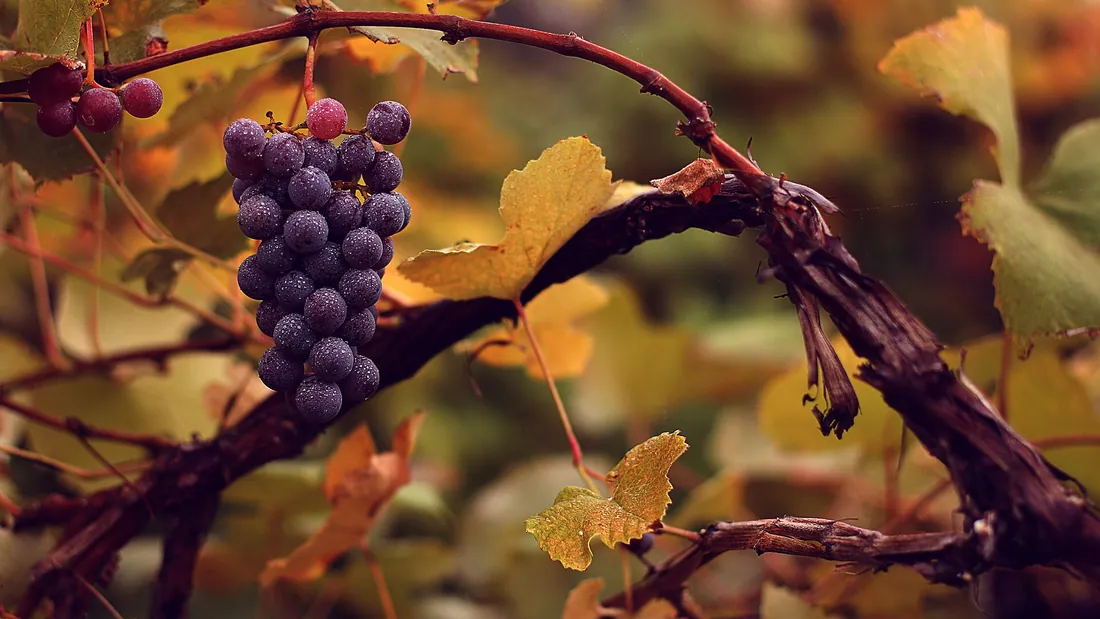

The grapevine (Vitis vinifera) is a vigorous climber that produces table grapes, grown since antiquity around the Mediterranean. In a cool climate it thrives along the warmest wall in the garden, where it benefits from the heat stored by the masonry. The real challenge there is not the cold, the stock takes winter without trouble, but ripeness: a short summer forces you to choose early varieties to hope for sweet grapes before autumn. Two operations shape the year, a severe winter pruning and a summer green pruning, without which the harvest stays meager and diseased.
Light and exposure
The grapevine needs all the sun it can get. Reserve the warmest wall in the garden for it, the one that catches the midday and afternoon sun, due south in the northern hemisphere and due north in the southern one, against which it will be trained: the stone or brick gives back the day’s heat at night and gains the degrees a cool summer lacks. A well-exposed pergola or arbor also does the job and gives shade under the vine as a bonus.
Avoid damp bottoms of the garden and poorly ventilated corners. The grapevine wants direct light on the bunches and air circulating around the foliage. A spot sheltered from cold winds, backed against a building, brings together the best conditions in a cool climate. In a very hot one the requirement reverses: there it is midday shade that saves the berries from sunburn.
Watering
Once established, the grapevine roots deeply and copes well with drought. For the first two years, water regularly while the root system goes down, especially in a pot or against a wall that dries out the base quickly. After that, a generous watering during long dry summer spells is enough, at the base and never on the foliage.
Beware of excess water more than of shortage. Constantly waterlogged soil favors disease and dilutes the sugars in the grapes. At the end of the season, when the bunches change color, keep the vine on the dry side: water stress concentrates the sugar and clearly improves the taste.
Soil and repotting
The grapevine is not demanding about soil richness, it even prefers poor, stony, well-drained ground to rich soil that makes it run to leaves at the expense of fruit. Soil too rich in nitrogen gives an exuberant climber and little fruit. The key is drainage: it hates standing water around the roots.
At planting, work the soil deeply because the roots go far down. If your soil is heavy and clayey, improve drainage with gravel and sand, and plant on a small mound if needed. A dose of well-rotted compost is amply enough, no need to overdo the fertilizer.
Temperature and humidity
The grapevine stock is perfectly hardy in a temperate climate and spends winter outdoors without protection: it takes severe frosts once the wood is ripened, the dormant buds hardly suffering above -15 to -20 °C. So it is not winter cold that poses a problem, unlike many tender fruit trees; it only becomes decisive again in a harsh continental climate, where you switch to hybrid varieties.
The sensitive point is summer heat and its duration. The grapevine needs a long warm season to ripen, and a mild, short summer limits it. Late spring frosts can also scorch the tender young shoots at budbreak, for as long as the frost season is not over: against a warm wall, this risk drops clearly. At the opposite end, past 30 °C in the canopy the vine slows its photosynthesis and the sugars stop rising.
Pruning and upkeep
Winter pruning is the key to fruiting and it must be rigorous. The grapevine only fruits on the current year’s shoots arising from one-year-old wood, so that wood must be renewed every winter by pruning short. Adopt a Guyot or cordon training: keep a few spurs with two or three buds and a replacement cane, and remove everything else. Prune in full dormancy, before the sap rises, otherwise the vine bleeds heavily.
During the growing season, green pruning takes over and counts just as much. Trim back shoots that grow too long to concentrate energy on the bunches. Above all, remove leaves around the bunches from veraison on to expose them to sun and air: this is what ripens and dries them, and limits rot. Leaf removal is judged by climate, generous where sun is short, cautious and limited to the less exposed side where the berries risk sunburn. Also remove the laterals and the surplus bunches to keep only what the vine can bring to maturity in your climate.
Pests and diseases
In a damp climate, the grapevine has two major enemies, both fungal. Downy mildew (Plasmopara viticola) covers the top of the leaves with oily yellow spots and the underside with a white felting, and can wipe out the bunches in mild, wet weather. Powdery mildew (Erysiphe necator) forms a grey powdery felting on leaves and berries, which split and rot. A mild, humid summer is a dream ground for both diseases, a hot dry one calms them markedly.
Two strategies. The best, choose resistant varieties from the start, called hybrid or interspecific, which need little or no treatment, a real comfort in a rainy region. Otherwise, on a classic susceptible variety, you must treat preventively from spring, Bordeaux mixture against downy mildew and sulfur against powdery mildew, renewing after rain. In every case, air the vine through pruning and leaf removal, dry air is your best ally.
Propagation
The grapevine propagates very easily by cuttings, it is the simplest route. In winter, during pruning, take pieces of well-ripened one-year wood, twenty to thirty centimeters long with three or four buds. Keep them cool in sand until spring, then plant them in a pot or in the ground with a single bud sticking out. The take is generous.
Layering also works very well: peg a long flexible shoot down to the ground in spring, bury part of it leaving the tip out, it roots within the year and is separated the following winter. For varieties grafted onto a phylloxera-resistant rootstock, note that cuttings reproduce the variety but not the root protection: for a few vines in a garden the stake stays low, but where phylloxera is established an own-rooted plant eventually declines and a grafted plant from the trade is safer.
Climate and hardiness
Where and in which climate it thrives
Winter cold is not what limits the grapevine: a well-ripened Vitis vinifera stock spends winter outdoors without protection and takes severe frosts. Dormant buds start to suffer around -15 to -20 °C, the trunk and arms below that, which puts the European vine in USDA zones 6 to 9. Interspecific hybrid varieties gain roughly 3 °C of hardiness, and the cold-climate selections hold to -30 °C: beyond zone 5 those are what you turn to, or the old trick of mounding soil over the canes for the winter.
Everything really hinges on heat and its duration. In a Mediterranean or warm temperate climate the vine is at home and ripens effortlessly. Under a cool climate with a short summer it becomes a gamble on ripeness: the warmest wall in the garden, the one that catches the midday and afternoon sun, an early variety, generous leaf removal around the bunches, and autumn arrives before the sugars if any one of the three is missing. Under a mild, damp climate it is downy and powdery mildew that decide, and a resistant variety spares you most of the treatments.
At the other extreme, excessive heat costs too. Photosynthesis slows as soon as the canopy passes 30 °C and collapses towards 40 °C: sugars stop rising and exposed berries burn. In a hot, dry climate you therefore reverse the gesture learned in a cool one, keeping the leaves that shade the bunches instead of stripping them, and irrigating so the vine keeps transpiring. Everywhere, the year keeps the same frame: fruiting pruning in full dormancy, green pruning through the growing season, harvest at the end of the warm season, and a berry tasted before you cut.
Growing grapevine?
Green Hub keeps a dated history of your own plant: its photos, its progress, its repottings. An AI answers about yours specifically, not a generic sheet, for free.
Identify my plantMonth-by-month care calendar
| January | Peak winter pruning period. Prune short in Guyot or cordon on the one-year wood, the vine is dormant and will not bleed. |
|---|---|
| February | Finish the pruning before the sap rises. Tie in and train the retained canes on the wire or against the wall. |
| March | The sap rises, budbreak approaches. Clean up the base, a light dose of ripe compost is enough. Too late to prune without making the vine bleed. |
| April | Budbreak, the young shoots emerge. Watch for late frosts that can scorch the tender buds against an exposed wall. |
| May | Rapid growth. First preventive treatment against downy and powdery mildew on a susceptible variety. Beware of the last frosts until mid-May. |
| June | Flowering, a delicate moment. Begin green pruning, trim the overlong shoots and remove the water sprouts. Renew treatments after rain. |
| July | The bunches form and swell. Continue trimming, thin the surplus bunches. Close watch for disease in damp weather. |
| August | Veraison, the berries change color. Remove leaves around the bunches to expose them to the sun. Reduce watering to concentrate the sugars. |
| September | Ripening and first harvests of the early varieties. Taste before you cut. Protect the bunches from wasps and birds with netting. |
| October | End of the garden harvest. Pick the remaining grapes before the heavy autumn rains that rot the bunches. |
| November | Leaf fall, the vine enters dormancy. Gather and remove the fallen foliage that harbors disease spores. |
| December | Vegetative rest. You can start winter pruning as soon as the wood is fully dormant. Take cuttings from the fine canes. |
Green Hub tips
- Choose an early, disease-resistant variety from the start, called hybrid or interspecific: in a short, damp climate, that is what changes everything.
- Train the grapevine against the warmest wall in the garden, the one that catches the afternoon sun: the heat given back at night by the masonry ripens a grape that would stay sour out in the garden.
- Do not be afraid to prune short in winter. The grapevine fruits on the current year’s wood arising from one-year wood, timid pruning gives lots of leaves and little grape.
- Remove leaves around the bunches from veraison on: sun and air ripen the berries and cut the ground from under downy mildew. In a very hot climate, go lighter so the berries do not burn.
- Always taste a berry before harvesting. A grape picked by eye, on its color, is often still sour: it is the sugar that decides.
Related species
Apple tree
Malus domestica
The apple tree (Malus domestica) is the king of fruit trees in temperate climates, the one that has filled family…
Blackcurrant
Ribes nigrum
The blackcurrant (Ribes nigrum) is a small hardy fruit shrub that is genuinely happy in a cool climate, down to USDA…
Blueberry
Vaccinium corymbosum
The cultivated blueberry (Vaccinium corymbosum) is the large shrubby cousin of the wild bilberry, also called the…
Cherry tree
Prunus avium
The cherry tree (Prunus avium) is a vigorous, hardy fruit tree, perfectly at ease in a temperate climate, from USDA…
Elder
Sambucus nigra
Elder (Sambucus nigra) is a large shrub native to temperate Europe that grows wild in hedgerows, along footpaths and on…
Fig tree
Ficus carica
The fig tree (Ficus carica) is a Mediterranean tree, yet it really can be grown up to USDA zone 7 provided you shelter…
The guides that mention it
Small fruits and fruit trees: where to begin
Raspberry, redcurrant, blackcurrant, blueberry, apple, pear: what to start an orchard with and how to avoid picking the…
Making Compost: Steering the Thermal Biology of the Heap
A compost heap is not a pile of waste you stir, it is a thermal process you steer. The real carbon/nitrogen ratio of…
Garden Mulching: Every Mulch Has an Effect and a Drawback
Mulching is presented everywhere as a benefit with no downside. There is one for every material: what nitrogen drawdown…
Garden Diseases: Recognising What Is Attacking Your Plants, and Acting Before the Spot Appears
A white bloom that wipes off on a fingertip, an angular lesion stopped dead by a vein, a fruit browned from the bottom…
Pruning Fruit Trees: Deducing Instead of Memorising
An apple tree and a cherry tree are pruned neither at the same time nor for the same reason, and the peach is like…
Updated on
How this sheet is written
Written for Green Hub with the help of language models, then reviewed. It offers gardening guidance, not professional advice: if you are unsure whether a plant is toxic to a child or an animal, ask a vet, a doctor or your national poison centre.