Blackcurrant
Ribes nigrum
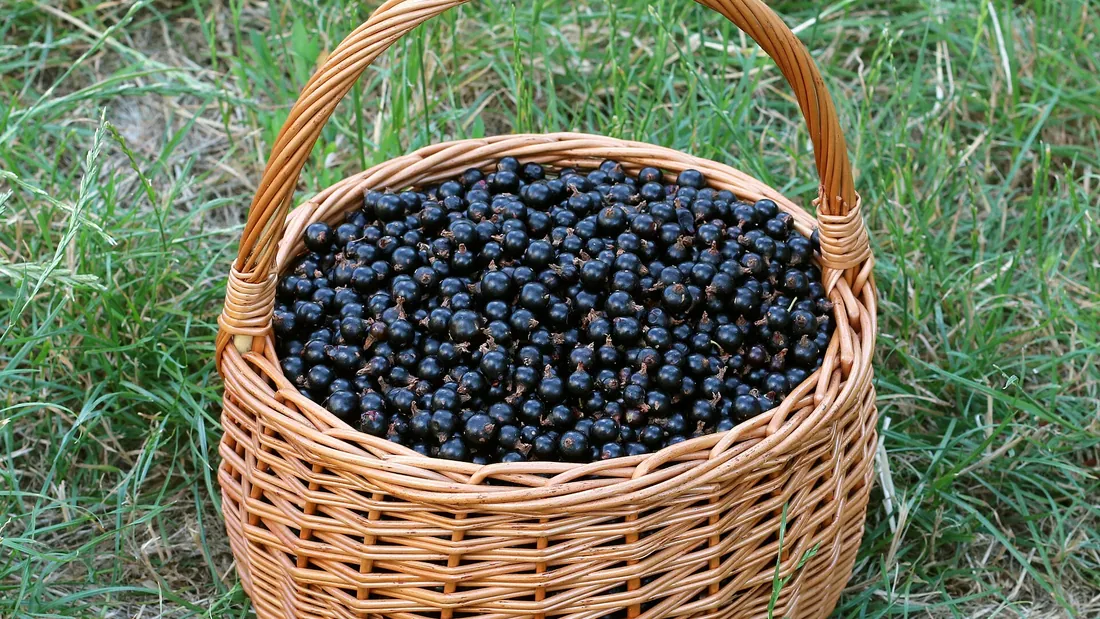

The blackcurrant (Ribes nigrum) is a small hardy fruit shrub that is genuinely happy in a cool climate, down to USDA zone 3. It gives clusters of very fragrant black berries, rich in vitamin C, right in the heart of summer. It is one of the easiest fruit shrubs to succeed with: it takes damp winters in its stride, accepts partial shade and asks for little care once established. The only real know how lies in the pruning, because the blackcurrant fruits mainly on young wood, which changes everything compared with a redcurrant.
Light and exposure
The blackcurrant does not need full sun to produce well, and that is good news for gardens that only get partial sun. It tolerates partial shade very well, which lets you give it a cool corner of the garden, to the east or at the foot of a wall that does not bake in the afternoon. Too scorching a position displeases it because it dries out the soil that it needs cool.
In practice, aim for a bright spot but protected from drying winds and blazing sun. A place that gets morning sun and a little shade in the afternoon suits it wonderfully, and gives well scented berries without the plant suffering from summer drought.
Watering
The watchword is coolness. The blackcurrant has fairly shallow roots and suffers quickly when the soil dries out, above all at the time the berries form and swell, between late spring and midsummer. A lack of water at this period makes the fruit drop or leaves it small and sour.
Water copiously during dry spells, aiming at the base and not the foliage. A good organic mulch in spring, dead leaves, dried grass clippings or coarse compost, keeps the moisture in and avoids watering too often. On heavy cool soil, summer watering will only be needed during real heatwaves.
Soil and repotting
The blackcurrant likes a cool, rich and deep soil, rather heavy, that holds water well. Clay soils, often shunned by other fruit shrubs, suit it perfectly as long as they are not permanently waterlogged. A good input of compost or well rotted manure at planting gets it off to a good start.
It likes slightly acidic to neutral soils and dreads active lime, which causes a yellowing of the leaves. If your soil is poor, enrich it each winter with mature compost on the surface. A living soil covered with a mulch reproduces fairly well the cool woodland edges the shrub comes from.
Temperature and humidity
This is a plant of the North, built for hard winters. The blackcurrant is perfectly hardy and withstands frosts of minus 20 degrees without flinching, and down to minus 30 degrees on well ripened wood. It even needs a good spell of winter cold to flower and fruit properly the following year: count on 800 to 1500 hours below 7 degrees depending on the variety.
The sensitive point is in spring. The early flowering, from the first mild spells, can be hit by a late frost that scorches the flowers and compromises the harvest. Choose by preference a variety that flowers a little later, and avoid hollows where cold air stagnates on clear nights of late spring.
Pruning and upkeep
This is the key task, and it rests on a simple rule: unlike the redcurrant, the blackcurrant fruits mainly on one year old wood, that is the young shoots of the previous year. The old wood, for its part, exhausts itself and produces less and less. All the pruning therefore aims to renew the framework constantly to encourage the emission of productive young wood.
In winter, when the shrub is at rest, remove at the base the oldest branches, those over three years, recognisable by their dark cracked bark. Keep the young vigorous shoots, which are lighter, and remove the dead or spindly wood. On an adult plant, you thus take out about a third of the old branches each year to force new shoots from the stump. A well renewed clump stays productive for ten to fifteen years.
Pests and diseases
The most dreaded enemy of the blackcurrant is reversion, a serious viral disease spread by the bud mite (Cecidophyopsis ribis). It shows in the large round swollen buds in winter, in deformed leaves and in a gradual drop in production. There is no treatment: pull up and burn the affected plants without waiting so as not to contaminate the neighbours.
Watch also for American powdery mildew, which covers leaves and young shoots with a white felting in mild humid weather, and blister rust, whose cycle passes through five needle pines: avoid planting the blackcurrant too close to these conifers. Airing the clump by pruning and gathering the diseased leaves greatly limits these two fungi in a damp climate.
Propagation
The blackcurrant propagates very easily from hardwood cuttings, an almost foolproof method within everyone’s reach. In autumn, after leaf fall, take from a healthy plant well ripened shoots of the current year, and cut them into sections of twenty to twenty five centimetres bearing several buds.
Plant these cuttings three quarters deep in loose cool soil, leaving only two or three buds showing. Leave them in place all winter and spring: the moisture of the cold season does the work, and rooting happens on its own. By the following autumn, you will have young plants ready to set in their final place.
Climate and hardiness
Where and in which climate it thrives
The blackcurrant is a fruit shrub of cool climates, and its hardiness is wide: it takes winters down to minus 30 degrees without protection, which makes it reliable from USDA zone 3 to zone 8. What limits it is not cold but its need for cold: it takes 800 to 1500 hours below 7 degrees to break its dormancy, depending on the variety. Under too mild a winter, in a Mediterranean or subtropical climate, bud break turns erratic, flowering drags on and the crop collapses.
Where it is most at ease is an oceanic or humid continental climate: heavy cool soils, sharp winters, mild summers. There it is one of the safest fruit shrubs a beginner can plant, it produces quickly and makes do with a lightly shaded corner. It struggles as soon as the summer turns hot and dry, because its roots are shallow: in such a climate, give it partial shade, mulch thickly and water while the berries are swelling.
Plant by preference bare root during dormancy, from leaf fall to the end of winter outside frost, for optimal rooting before the first hot season. The real risk is not winter cold but the late frost that scorches an early flowering: where the last frosts come late, prefer a late flowering variety and a spot sheltered from cold hollows. Expect a harvest in the heart of summer, generous and fragrant. Two gestures make all the difference: the winter pruning that removes the old wood to restart the productive young wood, and the watch for the large round buds of reversion, to pull up without mercy. A well managed plant will feed you for fifteen years.
Growing blackcurrant?
Green Hub keeps a dated history of your own plant: its photos, its progress, its repottings. An AI answers about yours specifically, not a generic sheet, for free.
Identify my plantMonth-by-month care calendar
| January | Full pruning season during dormancy. Remove at the base the branches over three years and the dead wood to force the productive young wood. |
|---|---|
| February | Last moment to prune and to plant bare root outside frost. Take advantage of the absence of leaves to spot and cut the large round buds of reversion. |
| March | Scratch in a little compost or rotted manure at the base. Set a thick mulch before the soil warms up and dries out. |
| April | Start of flowering. Watch the forecast: a late frost can scorch the flowers. Have a protective fleece ready for clear nights forecast below zero. |
| May | Fruit set and swelling of the berries. Keep the soil cool, water if the spring is dry. Once the last frosts have passed, all frost risk is gone. |
| June | The clusters fill out. Water copiously in case of a heatwave to avoid small sour fruit. Watch for powdery mildew in heavy weather. |
| July | Harvest. Pick the clusters when the berries are black and soft, in one or two passes. A net protects from birds if needed. |
| August | After harvest, remove the leaves affected by powdery mildew or rust. Carry on watering during droughts to prepare next year’s buds. |
| September | Refresh the mulch. Already spot the exhausted old branches to remove this winter. Pull up any plant showing clear signs of reversion. |
| October | Take your hardwood cuttings from the shoots of the current year and plant them three quarters deep in cool soil for free new plants. |
| November | Best period for bare root planting. Amend the soil with mature compost on the surface. Gather the dead leaves to break the disease cycles. |
| December | Vegetative rest. Begin the renewal pruning as soon as the wood is bare, and check for the absence of abnormally large round buds. |
Green Hub tips
- Remember the rule that makes all the difference: the blackcurrant fruits on one year old wood. In winter, cut the old wood over three years to force young productive shoots.
- A large round swollen bud in winter is not a good sign but that of reversion. Pull up and burn the affected plant without hesitation to protect the others.
- Do not plant your blackcurrant near a five needle pine: this conifer hosts the blister rust that then comes to spot the foliage.
- Propagate for free in autumn: a simple stem of the current year’s wood planted three quarters deep in cool soil roots on its own over winter.
- Keep the base cool with a good mulch: shallow roots left dry while the clusters are filling give small sour berries.
Related species
Redcurrant
Ribes rubrum
The redcurrant (Ribes rubrum) is a small bushy fruit shrub that produces those pretty clusters of translucent red…
Apple tree
Malus domestica
The apple tree (Malus domestica) is the king of fruit trees in temperate climates, the one that has filled family…
Blueberry
Vaccinium corymbosum
The cultivated blueberry (Vaccinium corymbosum) is the large shrubby cousin of the wild bilberry, also called the…
Cherry tree
Prunus avium
The cherry tree (Prunus avium) is a vigorous, hardy fruit tree, perfectly at ease in a temperate climate, from USDA…
Elder
Sambucus nigra
Elder (Sambucus nigra) is a large shrub native to temperate Europe that grows wild in hedgerows, along footpaths and on…
Fig tree
Ficus carica
The fig tree (Ficus carica) is a Mediterranean tree, yet it really can be grown up to USDA zone 7 provided you shelter…
The guides that mention it
Small fruits and fruit trees: where to begin
Raspberry, redcurrant, blackcurrant, blueberry, apple, pear: what to start an orchard with and how to avoid picking the…
Making Compost: Steering the Thermal Biology of the Heap
A compost heap is not a pile of waste you stir, it is a thermal process you steer. The real carbon/nitrogen ratio of…
Garden Mulching: Every Mulch Has an Effect and a Drawback
Mulching is presented everywhere as a benefit with no downside. There is one for every material: what nitrogen drawdown…
Garden Diseases: Recognising What Is Attacking Your Plants, and Acting Before the Spot Appears
A white bloom that wipes off on a fingertip, an angular lesion stopped dead by a vein, a fruit browned from the bottom…
Pruning Fruit Trees: Deducing Instead of Memorising
An apple tree and a cherry tree are pruned neither at the same time nor for the same reason, and the peach is like…
How to Attract Birds to Your Garden, Season After Season
Winter feeding, well-positioned nest boxes, clean water and berry hedges: the complete method, season by season, for…
Rainwater Harvesting for the Garden: Choosing and Sizing Your System
Rain barrel, above-ground tank, or underground cistern: how to choose the right size so your vegetable garden no longer…
Dividing, Taking Cuttings, Sowing: Multiplying Your Plants for Free
Dividing a perennial, taking cuttings from a shrub, or sowing seed straight from the garden: the techniques that fill a…
Updated on
How this sheet is written
Written for Green Hub with the help of language models, then reviewed. It offers gardening guidance, not professional advice: if you are unsure whether a plant is toxic to a child or an animal, ask a vet, a doctor or your national poison centre.