Fig tree
Ficus carica
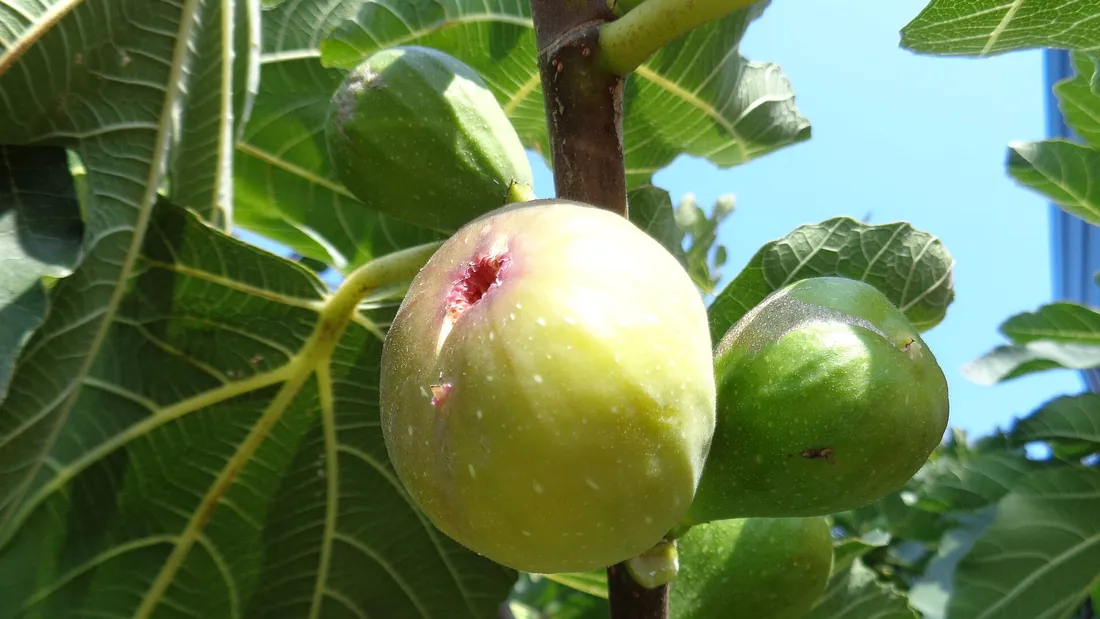

The fig tree (Ficus carica) is a Mediterranean tree, yet it really can be grown up to USDA zone 7 provided you shelter it. At the edge of its hardiness, everything comes down to the spot: against a good warm wall in full sun, or in a large pot you move under cover, frost-free, during harsh winters. Pick a hardy, early-ripening variety (Brown Turkey, Madeleine des Deux Saisons, Ronde de Bordeaux), protect the base with a thick mulch, and watch over the little winter figs that will give this year’s crop. In a hard frost it can freeze back to the ground, but it often resprouts from the stump.
Light and exposure
The fig tree wants heat, and more heat. At the edge of its hardiness the location makes all the difference: plant it against a wall in full sun that soaks up the heat during the day and gives it back at night. That wall warmth can add enough degrees to ripen the figs and get the tree through winter.
Give it the most direct light possible, six hours and more. A fig tree in the shade or in a cold corner will make wood and leaves, but few ripe fruits. In a pot, place it at the warmest and most sheltered spot on the terrace, backed against a wall if you can.
Watering
In the ground and well established, the fig tree tolerates drought: its roots go deep. In the first years, water regularly while it roots in, then space it out. Too much water gives swollen, bland figs that split.
In a pot it is another story. The volume of soil is limited, it dries out fast in summer and needs steady watering, sometimes daily in high heat. Let the surface dry between waterings, but never let the rootball dry out completely while the fruits are forming, or you will see them drop.
Soil and repotting
The fig tree is not fussy about soil type: it grows in poor, stony, even chalky ground. What it demands is drainage. Heavy, waterlogged soil in winter weakens its roots against frost far more than lean, dry soil.
A counterintuitive but essential point: the fig tree fruits better when its roots are confined. In the ground, a pit lined with slabs or old bricks, or a planting along a wall with foundations, limits root spread and pushes the tree to make fruit rather than wood. A pot naturally plays this restricting role.
Temperature and humidity
This is the sensitive point outside the Mediterranean basin. The fig tree tolerates moderate cold once mature, its ripened wood taking about minus 10 degrees, but a harsher winter, above all in a damp climate, can freeze it back to the ground. The good news: even then, the stump is often alive and resprouts vigorously in spring, even if it has to start over.
Two fragile things to protect: the base and the winter figs. Cover the base with a thick, generous mulch before the deep cold; well mulched, the stump holds down to USDA zone 6. The winter figs, those little nubs formed in autumn at the tips of the shoots, are the ones that will give next year’s crop: a severe frost destroys them and compromises production. On a wall-trained tree, a winter fleece on the harshest nights helps save them.
Pruning and upkeep
The fig tree does very well without heavy pruning. Just open up the center, remove dead wood and badly placed suckers, and cut back what overflows to keep a controlled shape, especially in a pot or trained against a wall. Step in at the end of winter, once the frosts have passed, when you can see what has survived.
A safety precaution not to take lightly: the fig tree oozes a latex, that white sticky sap, as soon as you cut a shoot or a leaf. This latex irritates the skin and is photosensitizing: in contact with the sun, it can cause real burns. Wear gloves to prune or harvest, and avoid exposing to the sun any skin that has touched the sap before washing it thoroughly.
Pests and diseases
The fig tree is a tough tree, little prone to disease. Its main enemy is not a fungus but the cold, covered above. In very damp, cool weather, a few figs may rot on the tree or split before ripening: remove them so they do not attract wasps and mold.
Birds and wasps invite themselves at ripening time, drawn by the sugar of the ripe figs. Harvest at the right moment, as soon as the fruit droops and turns soft, rather than letting it go over on the tree. On a pot brought in for winter, watch for scale insects and red spider mites that take advantage of the dry indoor air.
Propagation
The fig tree strikes from cuttings with disconcerting ease, it is even the simplest and most faithful way to propagate it. In late winter, take a well-ripened one-year shoot about twenty centimeters long and plant it two-thirds deep in a pot of sandy compost kept barely moist. Rooting happens in spring.
Layering also works very well: peg a low shoot down to the ground, cover a section with soil, and it roots on its own before being separated the following year. Always choose to propagate a hardy, early-ripening variety, of the Brown Turkey or Ronde de Bordeaux type, rather than a southern fig that will struggle to ripen in a short summer.
Climate and hardiness
Where and in which climate it thrives
The fig tree gives its best in USDA zones 8 to 10, in Mediterranean and subtropical climates where the summer is long and hot. Its limit is the wood: ripened shoots take about minus 10 degrees, below that they die back in part and take with them the winter figs, those little nubs formed in autumn that give the first crop of the following year. The stump, thickly mulched, survives far lower and comes back from the ground: that is what makes the fig tree growable down to zone 7, even zone 6 against a wall, at the price of regrowing every year.
Under a short cool summer, everything comes down to the spot. Either you plant it against a wall in full sun that stores the heat of the day, gives it back at night and cuts the wind, or you put it in a large pot you can move into a frost-free space, garage or veranda, during the harshest winters. The pot has a double advantage: it restricts the roots, which pushes the tree to fruit, and it can be moved. The choice of variety is just as decisive: the hardy figs of the Brown Turkey, Madeleine des Deux Saisons or Ronde de Bordeaux type ripen where a southern fig stays green.
Where the winter is mild but wet, it is the excess of water at the base that weakens the roots against frost, more than the cold itself: look after the drainage. Where the winter is dry and cold, protect the base with a thick, generous mulch and throw a fleece over the winter figs on the harshest nights. If frost does take the aerial part back to the ground, do not pull it up: the stump very often comes back stronger. The harvest runs from late summer into autumn, when the figs droop and turn soft to the touch. And at every pruning or picking, keep the irritating latex in mind: gloves on, and no sun on skin that has touched the sap.
Growing fig tree?
Green Hub keeps a dated history of your own plant: its photos, its progress, its repottings. An AI answers about yours specifically, not a generic sheet, for free.
Identify my plantMonth-by-month care calendar
| January | Winter rest. Check the base protection and the fleece on the winter figs on the coldest nights. Bring the pot into a frost-free space if the winter is harsh. |
|---|---|
| February | Late winter, the ideal time to take a cutting from a well-ripened shoot. Do not prune yet, wait to see what has frozen. |
| March | Budbreak approaching. Gradually remove the winter protections. Bring the pot back out into the warmth against a wall once the worst of the frost has passed. |
| April | Light pruning once the frosts are gone: dead wood, suckers, opening up. Wear gloves because of the latex. Growth resumes. |
| May | Active growth, still a frost risk on the young shoots as long as the last frosts have not passed. Resume regular watering, especially in a pot. Top-dressing or repotting finished. |
| June | The summer figs are swelling. Water steadily in a pot so they do not drop. Train the new shoots against the wall. |
| July | Continued fruit swelling. Pinch the tips of vigorous shoots if needed to concentrate the sap on the figs. Regular watering. |
| August | Harvest begins depending on variety and exposure. Pick the figs that are soft and drooping. Remove those that rot or split. |
| September | Full autumn harvest. The little winter figs start to form at the tips of the shoots, spare them. Watch for wasps and birds. |
| October | Last figs. Reduce watering. Prepare a thick mulch at the base before the first serious cold. |
| November | Leaf fall. Put the protections in place: thick mulch, fleece on the winter figs. Bring the pot in before hard frosts. |
| December | Rest. Tree under cover or mulched. Watch for spells of intense frost and check that the protections are holding. |
Green Hub tips
- At the edge of its hardiness, the location is everything: a good warm wall in full sun, or a large pot to bring in frost-free during harsh winters.
- Choose a hardy, early-ripening variety (Brown Turkey, Madeleine des Deux Saisons, Ronde de Bordeaux), or the figs will not ripen.
- Restricting the roots, in a pot or a lined pit, pushes the fig tree to fruit rather than make wood.
- If it freezes back to the ground in a harsh winter, do not pull it up: the stump very often comes back in spring.
- Fig tree latex is irritating and photosensitizing: prune and pick with gloves, and avoid the sun on skin that has touched the sap.
Related species
Fiddle-leaf fig
Ficus lyrata
Ficus lyrata, or fiddle-leaf fig, is an African understorey tree recognisable by its large, glossy, violin shaped…
Rubber plant
Ficus elastica
The rubber plant (Ficus elastica) is a tree of the humid forests of Southeast Asia, grown in temperate climates as a…
Apple tree
Malus domestica
The apple tree (Malus domestica) is the king of fruit trees in temperate climates, the one that has filled family…
Blackcurrant
Ribes nigrum
The blackcurrant (Ribes nigrum) is a small hardy fruit shrub that is genuinely happy in a cool climate, down to USDA…
Blueberry
Vaccinium corymbosum
The cultivated blueberry (Vaccinium corymbosum) is the large shrubby cousin of the wild bilberry, also called the…
Cherry tree
Prunus avium
The cherry tree (Prunus avium) is a vigorous, hardy fruit tree, perfectly at ease in a temperate climate, from USDA…
The guides that mention it
Small fruits and fruit trees: where to begin
Raspberry, redcurrant, blackcurrant, blueberry, apple, pear: what to start an orchard with and how to avoid picking the…
Overwintering your plants without losing them
Clivia, lavender, verbena, geranium, olive: which to bring indoors, which to protect outside, which to leave to face…
Toxic Plants for Cats and Dogs: Recognising the Danger Rather Than Memorising a List
A list of toxic plants is easily forgotten and always incomplete. What actually protects a cat or dog is recognising…
Garden Mulching: Every Mulch Has an Effect and a Drawback
Mulching is presented everywhere as a benefit with no downside. There is one for every material: what nitrogen drawdown…
Pruning Fruit Trees: Deducing Instead of Memorising
An apple tree and a cherry tree are pruned neither at the same time nor for the same reason, and the peach is like…
Dividing, Taking Cuttings, Sowing: Multiplying Your Plants for Free
Dividing a perennial, taking cuttings from a shrub, or sowing seed straight from the garden: the techniques that fill a…
Which Plants to Choose for a Drought-Resistant Garden
Deep roots, silvery foliage, Mediterranean origins: the plants that get through a dry summer without watering, and how…
Updated on
How this sheet is written
Written for Green Hub with the help of language models, then reviewed. It offers gardening guidance, not professional advice: if you are unsure whether a plant is toxic to a child or an animal, ask a vet, a doctor or your national poison centre.