Eggplant
Solanum melongena
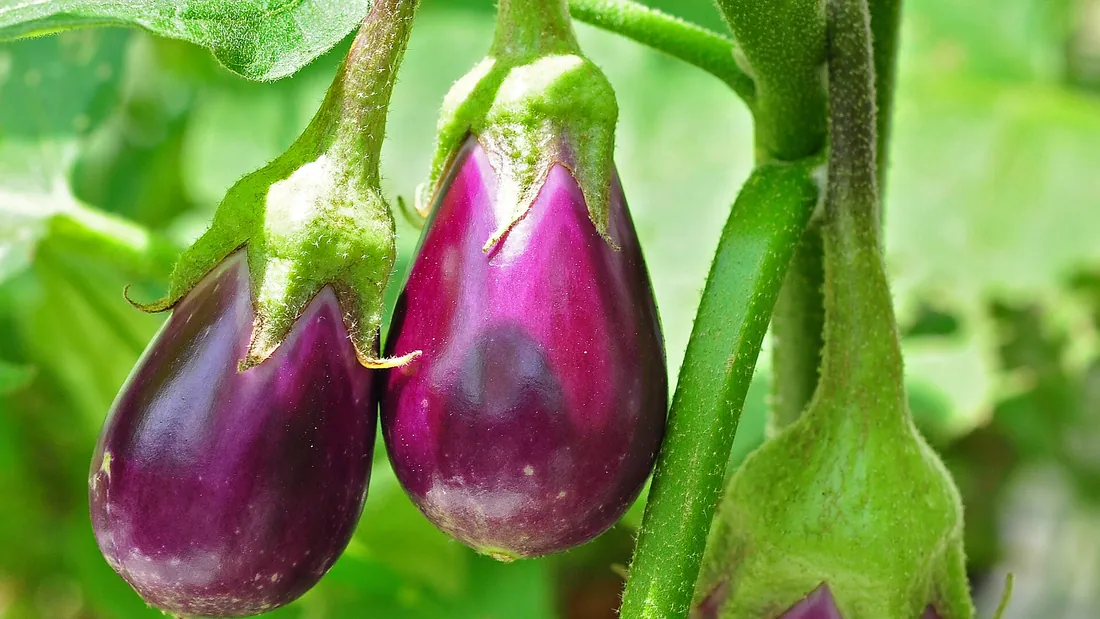
.JPG)
The eggplant (Solanum melongena) is the most cold-sensitive and the most heat-hungry of the garden nightshades, even more demanding than the tomato or the pepper. Where summers are short and cool, without a greenhouse or a tunnel, it is a gamble: it only really produces in an exceptional season and in the warmest corner of the garden. Sown very early in the warmth, well before the last frosts, it grows slowly and only goes out under cover once they have passed.
Light and exposure
The eggplant demands full sun and constant heat. Give it the warmest, brightest spot you have: a greenhouse, a tunnel, a conservatory, or failing that the foot of a wall that takes the midday sun and releases heat at night. Below six hours of direct sun, the fruits do not set.
Where summers stay cool, growing under cover changes everything. A greenhouse or a tunnel easily gains five to eight degrees over the outside air and shelters the plant from the cool wind. In open ground, reserve the most favourable microclimate for it and only expect a good harvest in truly hot summers.
Watering
The eggplant drinks a lot. A plant loaded with fruit transpires enormously in strong heat, and the slightest water stress aborts the flowers or gives bitter, fibrous fruits. Water regularly and generously at the base, without ever letting the soil dry out completely between two waterings.
Water in the morning, with water that is not ice-cold, and avoid wetting the foliage. Under glass, the heat dries the substrate fast: in a heatwave, a daily watering is not too much. A mulch at the base keeps the coolness in and smooths out the swings, which the plant hates above all.
Soil and repotting
The eggplant wants rich, deep, well-drained and above all warm soil. Amend generously at planting with mature compost or decomposed manure: it is a hungry plant that produces all season long. Heavy, cold soil brings it to a halt.
Plant nothing before the soil has really warmed up, never before the last frosts and only under cover where spring stays cool. Space the plants at least fifty centimetres apart, they become bulky. In a pot, count on at least ten to fifteen litres per plant, a dark container that heats in the sun, and a rich potting soil supplemented with fertiliser during fruiting.
Temperature and humidity
This is where everything is decided. The eggplant only really gets going above 20 degrees and does best between 22 and 28 degrees. Below 15 degrees it stalls, the flowers drop, and the slightest frost kills it. It is more cold-sensitive than the tomato, which explains why it so often fails outdoors in a cool climate.
Sowing requires bottom heat: it takes 24 to 27 degrees at seed level for a proper emergence, hence the use of a heat mat and supplementary light in late winter. Do not put any plant out until the last frosts have passed, and keep a fleece for the cool nights of early season. Under glass, ventilate as soon as it gets muggy to avoid excess humidity.
Pruning and upkeep
The eggplant bears heavy plants that bend under the weight of the fruit: stake each plant from planting, or train it on a wire under glass. Without a stake, the branches break once loaded. Pinch out the top above the second or third flower to force branching.
Where the season is short, limit the number of fruits. A plant trying to carry eight or ten will fatten none before the end of the season. Keep four to six fruits per plant, remove the late flowers that will never have time to ripen, and take off the suckers and the leaves that smother the centre to let air and light through.
Pests and diseases
Under glass, the red spider mite is the number one enemy: it thrives in hot, dry air and stings the foliage, which mottles then dries out. Dampen the atmosphere and check the underside of the leaves. Aphids colonise the young shoots, and the whitefly readily settles under cover.
The Colorado beetle attacks the eggplant as it does the potato: pick off adults, larvae and orange egg clusters by hand as soon as they appear. As for diseases, excess humidity favours botrytis, that grey rot on stems and fruits, and a soggy or cold soil opens the door to damping-off and collar diseases. Ventilate, water at the base, do not let water stagnate.
Propagation
The eggplant is propagated by sowing, and you must start very early because growth is slow. Sow indoors eight to ten weeks before the planting date, at 24 to 27 degrees on a heat mat, under supplementary light. Emergence takes one to three weeks. Prick out into pots as soon as there are two true leaves and keep the young plants nice and warm and bright.
Transplanting under cover happens once the last frosts have passed, when the plants are stocky and the soil has warmed. Choose early varieties, better suited to short summers. Saving your own seed is possible from a very ripe fruit left to yellow, but start from reliable seed so as not to add chance to an already difficult crop.
Toxicity
The fruit is edible and harmless. As with all nightshades, the foliage and stems contain solanine and are not to be eaten.
Climate and hardiness
Where and in which climate it thrives
An annual with no hardiness at all: the slightest frost kills the eggplant, and it already declines below 10 degrees at night. It only really gets going above 20 degrees and does best between 22 and 28 degrees by day, with nights of 16 to 20 degrees. Below 15 degrees at night the flowers open but do not set, a higher threshold than the tomato's. Above 35 degrees, growth stalls outright.
It is at home in hot climates, Mediterranean, subtropical or continental with a long summer: there it grows in the open field and the harvest spreads over months. In a cool, damp oceanic climate with a short season, open ground remains a gamble you only win in the great summers: the plant flowers late, sets little, and the back end of the season catches it before it has fattened its fruit. A greenhouse, a tunnel or even a conservatory gains five to eight degrees over the outside air there and turns a likely failure into a real harvest.
Three moves change everything where the summer is short: grow under cover or against a wall that takes the midday sun, choose early varieties such as 'Bonica' or 'De Barbentane' rather than late ones, and limit each plant to four or six fruits so they have time to ripen before the cold. Under dry heat the problem is reversed: the red spider mite explodes below 50 per cent humidity, so damp the foliage morning and evening. In a humid climate, ventilate the shelter as soon as the air turns muggy, or botrytis settles into the dense foliage.
Growing eggplant?
Green Hub keeps a dated history of your own plant: its photos, its progress, its repottings. An AI answers about yours specifically, not a generic sheet, for free.
Identify my plantMonth-by-month care calendar
| January | Nothing in the garden. Order the seeds and aim for early varieties, safer where the season is short. |
|---|---|
| February | First sowings indoors, at 24 to 27 degrees on a heat mat and under supplementary light. Emergence is slow. |
| March | Continue the sowings. Prick out into pots as soon as there are two true leaves and keep the plants nice and warm and bright. |
| April | Repot the plants as they grow, keep up the heat. Put nothing out, it still frosts at night here. |
| May | Harden off the plants in the warmth of the day. Plant under greenhouse or tunnel from mid-May, never before. |
| June | Setting up. Stake, pinch the top to branch out. Water generously at the base and mulch to keep the coolness in. |
| July | Full growth. Ventilate the greenhouse in muggy weather, watch for the red spider mite, water every day in a heatwave. |
| August | First harvests. Pick the shiny, firm fruits. Limit the late flowers to concentrate the sap. |
| September | Full harvest under cover. Remove the flowers that will no longer ripen and keep the air moving against botrytis. |
| October | Last eggplants before the cold. Harvest everything left, the plant declines as soon as the nights cool. |
| November | End of cycle. The eggplant does not overwinter here. Pull up the plants, clean the greenhouse and the stakes. |
| December | Rest. Note the season’s yield and keep in mind the varieties that produced well for next year. |
Green Hub tips
- Without a greenhouse or a tunnel, the eggplant is a gamble wherever summers stay cool. A wall that takes the midday sun and a hot summer are the minimum to hope for a harvest.
- Limit to four or six fruits per plant. Loaded with more, the plant fattens none before the end of a short season.
- Sow very early, eight to ten weeks before planting, and at 24 to 27 degrees. Without bottom heat and supplementary light, the seeds come up poorly and the plants drag.
- Under glass, watch for the red spider mite on the back of the leaves. Dampen the surrounding air, it hates humidity and loves dry heat.
Related species
Bell pepper
Capsicum annuum
The bell pepper (Capsicum annuum) is an annual fruiting vegetable and a genuinely cold-shy one, the sweet cousin of the…
Petunia
Petunia
Petunia (genus Petunia), also sold under the name Surfinia for its trailing varieties, is the queen of summer window…
Potato
Solanum tuberosum
The potato (Solanum tuberosum) is one of the most rewarding crops in the vegetable garden: easy, productive and…
Tomato
Solanum lycopersicum
The tomato (Solanum lycopersicum) is the queen of the vegetable garden, but it is a plant of sun and warmth that plays…
Artichoke
Cynara scolymus
The artichoke (Cynara scolymus) is a large perennial with silvery, deeply cut foliage, as striking in an ornamental…
Asparagus
Asparagus officinalis
Asparagus (Asparagus officinalis) is an unusual perennial for a vegetable patch: once established, an asparagus bed…
The guides that mention it
Making Compost: Steering the Thermal Biology of the Heap
A compost heap is not a pile of waste you stir, it is a thermal process you steer. The real carbon/nitrogen ratio of…
Garden Mulching: Every Mulch Has an Effect and a Drawback
Mulching is presented everywhere as a benefit with no downside. There is one for every material: what nitrogen drawdown…
Vegetable Garden Pests: The Natural Method That Holds All Season
A leaf riddled with holes, a lettuce shaved to the ground overnight, a twisted and sticky shoot: every kind of damage…
Garden Diseases: Recognising What Is Attacking Your Plants, and Acting Before the Spot Appears
A white bloom that wipes off on a fingertip, an angular lesion stopped dead by a vein, a fruit browned from the bottom…
Gardening on a Balcony or Terrace: Vegetables and Flowers in Pots
Weight, wind, exposure: what really changes when you garden up high instead of in open ground, and how to choose your…
Rainwater Harvesting for the Garden: Choosing and Sizing Your System
Rain barrel, above-ground tank, or underground cistern: how to choose the right size so your vegetable garden no longer…
Gardening Under a Greenhouse or Cold Frame: Growing All Year Round
A greenhouse or even a simple cold frame changes everything: sowings brought forward by several weeks, harvests…
Sowing Seeds Successfully: Why It Fails, and What Fixes It
A seed that never comes up was not unlucky. Germination temperatures by species, correct depth, seeds that need light,…
Updated on
How this sheet is written
Written for Green Hub with the help of language models, then reviewed. It offers gardening guidance, not professional advice: if you are unsure whether a plant is toxic to a child or an animal, ask a vet, a doctor or your national poison centre.