Tomato
Solanum lycopersicum
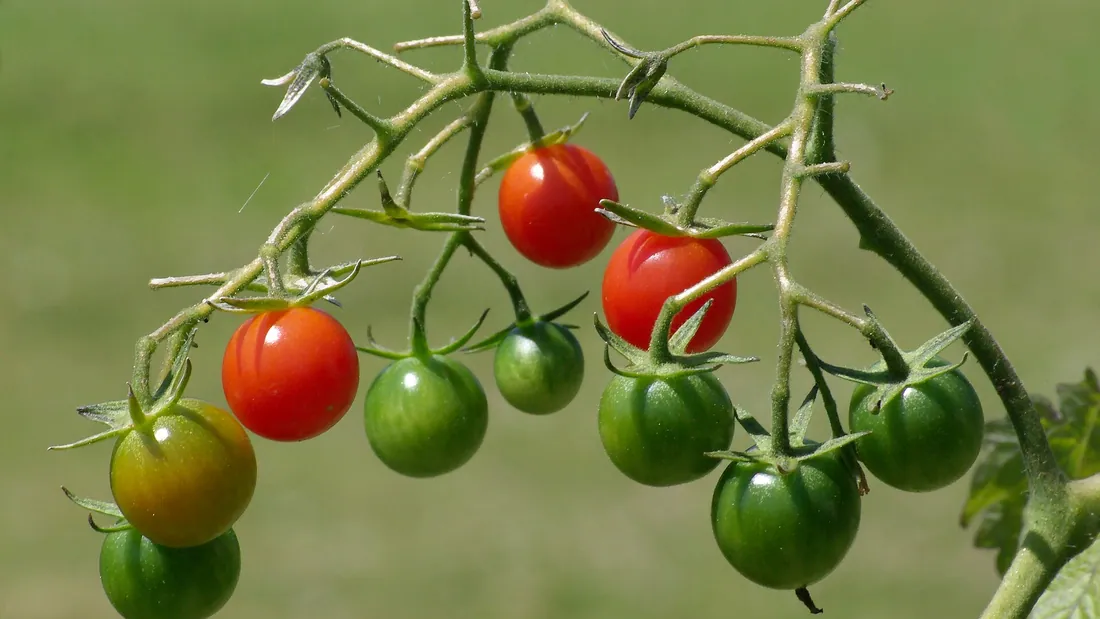

The tomato (Solanum lycopersicum) is the queen of the vegetable garden, but it is a plant of sun and warmth that plays a tight game wherever the season is short, cool and damp. Those conditions favour blight, its great enemy. The key to success then comes down to three moves: sow under cover six to eight weeks before your last frosts, plant outdoors only once those are past, and grow preferably in a greenhouse or under a rain shelter with early varieties.
Light and exposure
The tomato demands the maximum of sun and warmth. Choose the most sheltered and sunniest spot in the garden, ideally against a wall that takes the midday sun and releases its heat in the evening. It needs at least six to eight hours of direct sun a day.
Where the season stays cool, growing in a greenhouse, under a tunnel or even under a simple lean-to that protects the foliage from rain changes everything: it brings the harvest forward, extends it into autumn and sharply reduces the risk of blight.
Watering
Water regularly and always at the base, never on the foliage. Wet foliage is the first way in for blight during humid summers. Morning is the best moment, so the soil warms up and everything dries during the day.
Aim for consistency rather than abundance. Swings between drought and heavy watering split the skin of the fruits and cause blossom end rot, that black patch at the bottom of the tomato. A mulch at the base keeps moisture stable and limits soil splashing onto the lower leaves.
Soil and repotting
The tomato is a hungry plant. It likes deep soil, rich in compost and well drained. Work in mature compost or decomposed manure at planting time, and avoid replanting in the same spot two years running so as not to exhaust the soil or keep diseases going.
In a pot or a container on a terrace, allow a large volume, at least thirty litres per plant, with a quality vegetable potting mix and good drainage at the bottom.
Temperature and humidity
The tomato only really gets going above 15 degrees and suffers below 10. It tolerates no frost. Below 12 degrees at night, growth stalls and the flowers set poorly, which gives clusters that drop without forming fruit.
That is the whole challenge of a short season: the nights stay cool late into spring and turn cold again early in autumn. A greenhouse or tunnel gains a few precious degrees and lengthens the harvest window at both ends of the season. In a hotter climate the calculation is reversed, and ventilating the shelter matters more than gaining warmth.
Pruning and upkeep
For indeterminate varieties, the most common ones, stake firmly and remove the suckers, those shoots that start in the axil between the main stem and a branch. This concentrates the energy on the fruit.
At the end of the season, about two months before your first expected frosts, top the plants above the last worthwhile cluster. The time left will not be enough to ripen more fruit, so better to feed those already set. Thin out the lower leaves moderately to let air circulate and let the sun reach the clusters.
Pests and diseases
Blight, caused by Phytophthora infestans, is the number one enemy of the tomato wherever the summer stays mild and damp. Brown, oily patches on the leaves and stems, then on the fruit, can ravage a plant in a few days of mild, damp weather. The best defence is to keep the foliage dry: growing under cover, watering at the base, plants spaced out and well aired.
Also watch out for blossom end rot, tied to irregular watering rather than to a disease, and aphids. Remove and throw away, without composting, any foliage affected by blight to slow the spread.
Propagation
Sowing is done indoors, warm between 20 and 24 degrees, six to eight weeks before your last frosts. Sow in pots, half a centimetre deep. Germination takes a good week. Prick out the seedlings as soon as they have their first true leaves, burying them a little deeper, because the stem puts out new roots.
Harden off the young plants by taking them out gradually during the day before planting. Only set them outdoors once all risk of frost has passed.
Toxicity
The ripe fruits are edible, but the leaves, stems and green fruit contain solanine and tomatine, toxic in quantity. Do not eat the foliage and keep it away from animals.
Climate and hardiness
Where and in which climate it thrives
The tomato is a tropical perennial that frost kills: it lives through the year only in USDA zones 10 and 11, which never freeze, and is grown as an annual everywhere else. It only gets going above 15 degrees, suffers below 10 and tolerates no frost at all. Below 12 degrees at night the pollen is no longer released properly and the flowers drop without setting; above 32 to 35 degrees by day it turns sterile and fruit set stops for the same reason. The useful window is therefore narrow at both ends: days between 20 and 28 degrees, nights above 14.
It is at home in a Mediterranean or continental climate with a hot, dry summer: there the open ground is enough and water is the only real constraint. In a cool, damp oceanic climate with a short season, blight (Phytophthora infestans) dictates everything: it needs a few hours of relative humidity above 87 to 90 per cent and free water on the leaves to infect, then only three to five days to produce a new generation of spores, and a plant can go down in a week of mild, wet weather. In humid subtropical heat the same logic applies, with the added block on fruit set on afternoons above 35 degrees.
Three moves change the game where the summer is short and damp. Sow under cover six to eight weeks before your last frosts, and plant out only once those are firmly past, because a single freezing night is enough. Keep the rain off the foliage with a greenhouse, a tunnel or a simple lean-to: that is what breaks the blight cycle, better than any treatment. Choose early, tolerant varieties such as Fandango, Ferline or Fantasio, which crop before the damp end of the season sets in, and top the plants about two months before your first expected frosts. Under glass in a hot climate the reflex is reversed: ventilate as soon as the air passes 30 degrees, or fruit set stops.
Growing tomato?
Green Hub keeps a dated history of your own plant: its photos, its progress, its repottings. An AI answers about yours specifically, not a generic sheet, for free.
Identify my plantMonth-by-month care calendar
| January | Choose your varieties, favouring the early and blight-resistant ones. Order the seeds. |
|---|---|
| February | Prepare the sowing equipment. Still too early to sow without heat or supplementary light. |
| March | Sow indoors, warm between 20 and 24 degrees, near a bright window or under a grow light. |
| April | Prick out the young plants into pots. Enrich the vegetable garden soil with compost. Keep everything under cover, it is still freezing. |
| May | Harden off the plants in the open air. Plant in open ground or in the greenhouse only after mid-May. Set up the stakes. |
| June | Rapid growth. Remove the suckers, water at the base regularly, mulch the soil. First flowers. |
| July | Fruit forming. Stay consistent with watering to avoid splitting and blossom end rot. Watch blight closely. |
| August | Full harvest. Around mid-month, top the plants above the last useful cluster. Keep removing diseased foliage. |
| September | Last ripe tomatoes. Pick the fruit still green before the first cold and ripen it indoors. |
| October | End of season. Pull up the plants, throw away without composting anything that had blight, clean the stakes. |
| November | The vegetable garden rests. Amend the soil with compost and plan a rotation for next year. |
| December | Season review. Note the varieties that held up well in your own garden to recommend them next year. |
Green Hub tips
- In a humid climate, a simple rain shelter above the plants is worth all the treatments: blight needs wet foliage to take hold.
- Bury the young plants deeper than they were in their pot. The stem covered with soil makes new roots and gives a sturdier plant.
- About two months before your first expected frosts, top the plants without hesitation. Fruit set after that point will not have time to ripen before the cold.
- Regular rather than abundant watering: it is the swings that split the skin and blacken the bottom of the tomatoes.
Related species
Bell pepper
Capsicum annuum
The bell pepper (Capsicum annuum) is an annual fruiting vegetable and a genuinely cold-shy one, the sweet cousin of the…
Eggplant
Solanum melongena
The eggplant (Solanum melongena) is the most cold-sensitive and the most heat-hungry of the garden nightshades, even…
Petunia
Petunia
Petunia (genus Petunia), also sold under the name Surfinia for its trailing varieties, is the queen of summer window…
Potato
Solanum tuberosum
The potato (Solanum tuberosum) is one of the most rewarding crops in the vegetable garden: easy, productive and…
Artichoke
Cynara scolymus
The artichoke (Cynara scolymus) is a large perennial with silvery, deeply cut foliage, as striking in an ornamental…
Asparagus
Asparagus officinalis
Asparagus (Asparagus officinalis) is an unusual perennial for a vegetable patch: once established, an asparagus bed…
The guides that mention it
The vegetable garden calendar, from sowing to harvest
Two dates are enough to build an entire vegetable garden year: your last spring frost and your first autumn frost.…
Watering Plants Properly: Deciding Rather Than Following a Schedule
Beginners water too often and too little at the same time. How to read the soil instead of the calendar, tell thirst…
Toxic Plants for Cats and Dogs: Recognising the Danger Rather Than Memorising a List
A list of toxic plants is easily forgotten and always incomplete. What actually protects a cat or dog is recognising…
Making Compost: Steering the Thermal Biology of the Heap
A compost heap is not a pile of waste you stir, it is a thermal process you steer. The real carbon/nitrogen ratio of…
Garden Mulching: Every Mulch Has an Effect and a Drawback
Mulching is presented everywhere as a benefit with no downside. There is one for every material: what nitrogen drawdown…
Vegetable Garden Pests: The Natural Method That Holds All Season
A leaf riddled with holes, a lettuce shaved to the ground overnight, a twisted and sticky shoot: every kind of damage…
Garden Diseases: Recognising What Is Attacking Your Plants, and Acting Before the Spot Appears
A white bloom that wipes off on a fingertip, an angular lesion stopped dead by a vein, a fruit browned from the bottom…
Gardening on a Balcony or Terrace: Vegetables and Flowers in Pots
Weight, wind, exposure: what really changes when you garden up high instead of in open ground, and how to choose your…
Updated on
How this sheet is written
Written for Green Hub with the help of language models, then reviewed. It offers gardening guidance, not professional advice: if you are unsure whether a plant is toxic to a child or an animal, ask a vet, a doctor or your national poison centre.