Potato
Solanum tuberosum
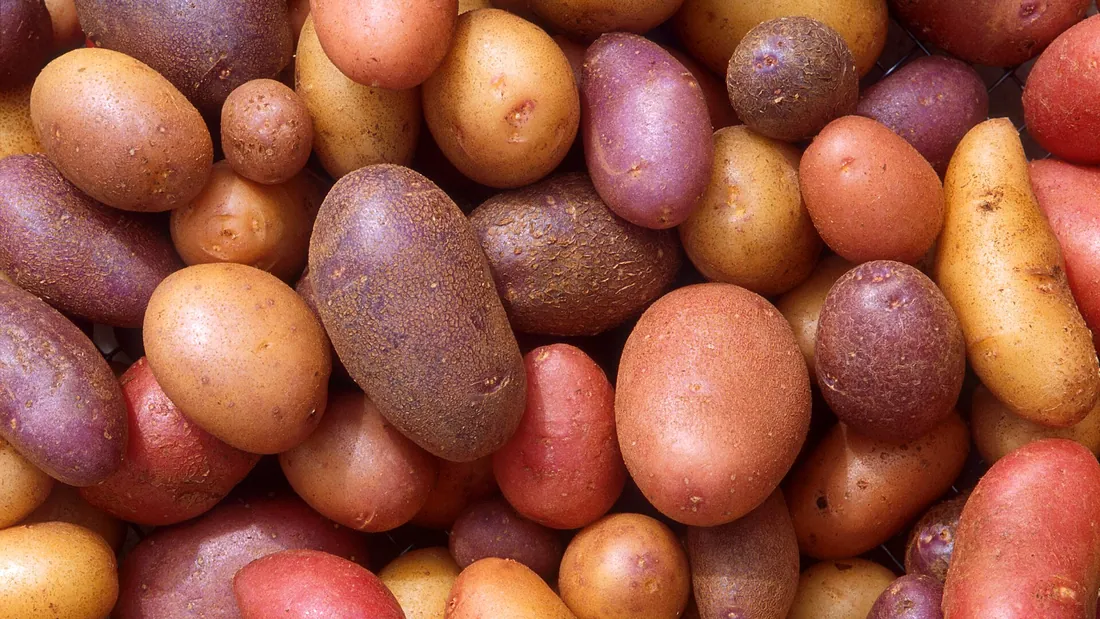

The potato (Solanum tuberosum) is one of the most rewarding crops in the vegetable garden: easy, productive and generous once the foliage is up. You plant when the soil reaches seven to eight degrees, but the real trap is late frost, which scorches the young foliage in a single night at around minus two degrees. The other threat, ever-present under mild, humid summers, is late blight. Regular earthing up and a well-suited variety, early or resistant, make for generous harvests.
Light and exposure
The potato wants sun, an open and well-lit position to develop its foliage and feed the tubers. The more light it receives, the more abundant the harvest.
Avoid the hollows where cold air pools and where late frosts strike hardest early in the season. Slightly sloping or raised ground, where the air circulates, limits the risk to the young foliage as it emerges.
Watering
The potato mainly needs water at flowering time and during tuber formation. Steady watering during this period, when the ground dries out, clearly increases the size and number of the tubers. Water copiously but spaced out rather than little and often.
Avoid wetting the foliage: moisture on the leaves encourages late blight, the main enemy in mild, humid climates. Through a rainy spring, watering is generally pointless until flowering. Stop watering as harvest approaches so the skin of the tubers forms properly.
Soil and repotting
The potato likes deep, loose, humus-rich and well-drained soil. Ground loosened deep down lets the tubers swell without constraint. It appreciates an application of well-rotted compost, but not fresh manure, which encourages diseases.
In the region’s heavy, damp soils, good soil work in spring and earthing up improve the drainage around the tubers and prevent them from rotting. Practise rotation: do not put potatoes back in the same spot for three or four years so as not to sustain soil diseases.
Temperature and humidity
The potato grows well in cool conditions, but its foliage is very sensitive to frost. The soil must have reached about seven to eight degrees deep down for the tubers to start properly. A young plant that has emerged from the ground is destroyed in a single night by a frost, even a light one, at around minus two degrees.
This is the critical point of the calendar. You plant two to four weeks before your average last frost date, but the foliage often comes up while a cold night is still possible. If frost is forecast while the foliage is up, earth up again to cover it with soil, or cover it with a fleece. The plant recovers if the tubers are not affected, but each frost delays the harvest.
Once the growing season is under way the foliage grows between seven and thirty degrees, best around twenty to twenty-five; above thirty degrees tuber formation slows sharply, and nights that stay above eighteen degrees stop it almost completely. That is why gardeners in hot regions grow the potato through the cool season.
Pruning and upkeep
The potato is not pruned, it is earthed up. Earthing up means drawing the soil into a ridge around the stems as growth proceeds, as soon as the foliage reaches about twenty centimetres, then a second time later. It is an essential gesture: it multiplies the tubers, protects them from greening in the light, and improves drainage.
Earthing up also serves as an express defence against a forecast late frost: by covering the young foliage with soil, you shelter it for the night. Remove the flowers if you wish, but it is not essential; on the other hand, never eat the small green fruits that follow flowering, they are toxic.
Pests and diseases
Late blight (Phytophthora infestans) is enemy number one in a mild, humid climate. It marks the foliage with brown spots that spread fast in a rainy summer, reaching the stems then the tubers, which rot. Choose resistant varieties, space the plants so they dry, earth up well, and cut the affected foliage without composting it at the first outbreaks.
The Colorado potato beetle (Leptinotarsa decemlineata), a yellow beetle striped with black whose red larvae devour the foliage, is the other great pest. Pick off by hand the adults, orange eggs under the leaves and larvae as soon as they appear in early summer. Watch out too for wireworms, those thread-like worms that bore into the tubers in recently grassed soils.
Propagation
The potato is propagated by planting tubers, called seed potatoes or seed. Buy certified healthy seed potatoes and pre-sprout them a month before planting, in light and cool conditions, so they form small, stocky, green sprouts: emergence is then quicker and the harvest earlier. Plant sprouts pointing upwards, about ten centimetres deep, every thirty to forty centimetres.
Avoid replanting your own tubers from one year to the next for more than a season or two: they accumulate viruses and diseases, and the harvest degenerates. It is better to start again from certified seed potatoes regularly to keep the crops healthy.
Toxicity
Tubers greened by light and all the green parts of the plant (leaves, stems, fruits) contain solanine, which is toxic. Never eat a green potato and keep the tubers in the dark.
Climate and hardiness
Where and in which climate it thrives
The potato is not a hardy plant: it is an annual crop whose foliage dies at around minus two degrees and whose tubers rot in frozen ground. What matters is therefore not your USDA zone but the length of your frost-free season, ninety to a hundred and thirty days depending on how early the variety is. Plant when the soil reaches seven to eight degrees at ten centimetres deep, that is two to four weeks before your average last frost: by the time the foliage is up, most of the risk has passed. The foliage then grows between seven and thirty degrees, with an optimum of twenty to twenty-five degrees by day and cool nights, below eighteen degrees, without which tuber formation slows down and then stops.
In a mild, humid oceanic climate, cold is not the real problem: late blight is, and it settles in as soon as the foliage stays wet through warm, rainy summers. Resistant varieties, generous earthing up and wide spacing are worth every spray. In a continental climate with harsh winters and hot summers, the window is short and clear-cut: plant as soon as the soil warms, mulch to keep the roots cool and water steadily during tuber formation. In a Mediterranean or subtropical climate the calendar is reversed: the crop is grown from late autumn to spring, since summer heat is lethal to tuber formation.
Harvest and storage, on the other hand, are the same everywhere: dry the tubers off, then store them in complete darkness at four to eight degrees, otherwise they green within days and build up solanine.
Growing potato?
Green Hub keeps a dated history of your own plant: its photos, its progress, its repottings. An AI answers about yours specifically, not a generic sheet, for free.
Identify my plantMonth-by-month care calendar
| January | Rest. Choose your varieties, favour those resistant to late blight, and order your certified seed potatoes. |
|---|---|
| February | Prepare the bed. Too early to plant, the soil is cold and damp. |
| March | Set the seed potatoes to pre-sprout, in light and cool conditions, to form good stocky sprouts. Loosen the soil. |
| April | Planting in open ground, sprouts pointing upwards. Loosen and apply well-rotted compost. |
| May | Foliage emergence. Beware of the last late frosts, earth up again or cover if frost threatens. First earthing up. |
| June | Active growth and flowering. Second earthing up. Chase the Colorado potato beetle by hand as soon as it appears. Watch for late blight. |
| July | Tuber formation. Water if the ground dries out. Harvest of the earlies. Vigilance against late blight in humid weather. |
| August | Full harvest. Cut the foliage affected by late blight without composting it. Harvest in dry weather. |
| September | Harvest of the storage varieties, when the foliage has yellowed. Let the tubers dry out before bringing them in. |
| October | Last harvests. Store in the dark, cool and dry. Clean the bed and plan the rotation. |
| November | Vegetable garden at rest. Amend the soil. Do not put potatoes back in the same spot for three or four years. |
| December | Review. Check the stored tubers, discard those that rot or green. Note the varieties that held up well. |
Green Hub tips
- Pre-sprout your seed potatoes a month before, in light and cool conditions: emergence is quicker and the harvest earlier.
- For as long as a late frost is still possible, keep soil ready to earth up: an express earthing up covers the young foliage overnight.
- As soon as an outbreak of late blight spreads, cut the foliage: the tubers keep for a few days in the ground, sheltered from contamination.
- Never eat a greened potato: light develops toxic solanine in it. Always store in the dark.
Related species
Bell pepper
Capsicum annuum
The bell pepper (Capsicum annuum) is an annual fruiting vegetable and a genuinely cold-shy one, the sweet cousin of the…
Eggplant
Solanum melongena
The eggplant (Solanum melongena) is the most cold-sensitive and the most heat-hungry of the garden nightshades, even…
Petunia
Petunia
Petunia (genus Petunia), also sold under the name Surfinia for its trailing varieties, is the queen of summer window…
Tomato
Solanum lycopersicum
The tomato (Solanum lycopersicum) is the queen of the vegetable garden, but it is a plant of sun and warmth that plays…
Artichoke
Cynara scolymus
The artichoke (Cynara scolymus) is a large perennial with silvery, deeply cut foliage, as striking in an ornamental…
Asparagus
Asparagus officinalis
Asparagus (Asparagus officinalis) is an unusual perennial for a vegetable patch: once established, an asparagus bed…
The guides that mention it
The vegetable garden calendar, from sowing to harvest
Two dates are enough to build an entire vegetable garden year: your last spring frost and your first autumn frost.…
Improving Clay Soil: Diagnosis, Amendments and Drainage
Ground that clings to your boots in winter and cracks open in summer: a clay soil is not condemned, it changes with the…
Garden Mulching: Every Mulch Has an Effect and a Drawback
Mulching is presented everywhere as a benefit with no downside. There is one for every material: what nitrogen drawdown…
Vegetable Garden Pests: The Natural Method That Holds All Season
A leaf riddled with holes, a lettuce shaved to the ground overnight, a twisted and sticky shoot: every kind of damage…
Garden Diseases: Recognising What Is Attacking Your Plants, and Acting Before the Spot Appears
A white bloom that wipes off on a fingertip, an angular lesion stopped dead by a vein, a fruit browned from the bottom…
Companion Planting in the Vegetable Garden: Which Plants Belong Together
Tomatoes and basil get along beautifully, while potatoes and tomatoes make each other sick: companion planting explains…
Living soil: the no-dig method for a garden that thrives without a spade
Giving up digging means letting earthworms and mycorrhizae build a living soil that feeds the garden in your…
Gardening with Children: Where to Start in the Vegetable Patch
Radishes that sprout in a week, peas nibbled straight from the row, potatoes dug up like buried treasure: the vegetable…
Updated on
How this sheet is written
Written for Green Hub with the help of language models, then reviewed. It offers gardening guidance, not professional advice: if you are unsure whether a plant is toxic to a child or an animal, ask a vet, a doctor or your national poison centre.