Sage
Salvia officinalis
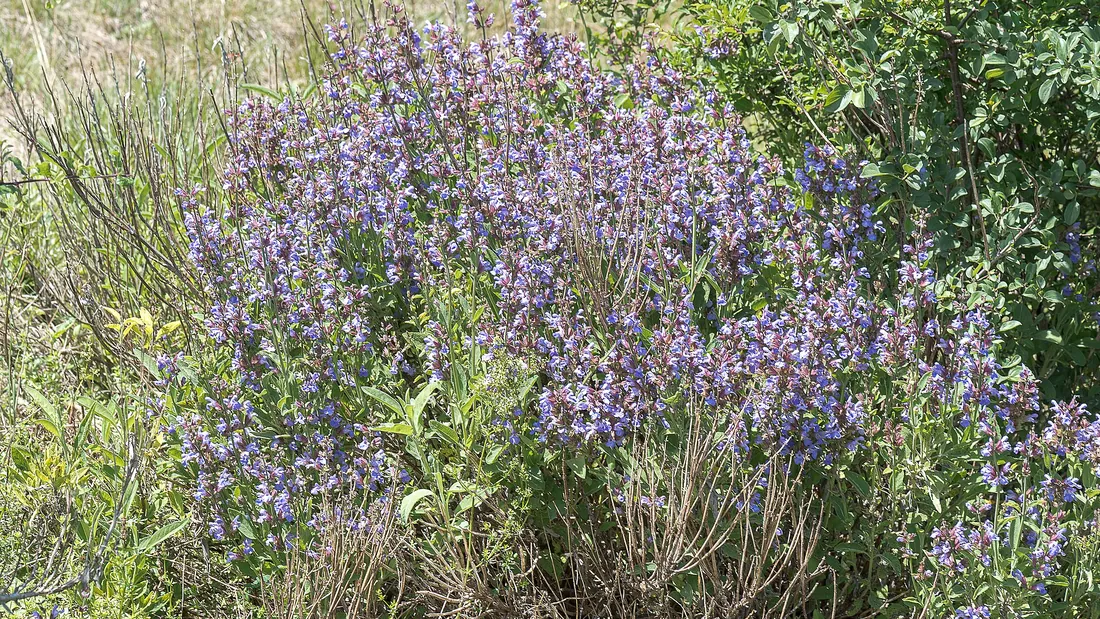

Common sage (Salvia officinalis) is a small aromatic shrub with evergreen grey-green foliage, originating from the dry hillsides of the Mediterranean. Unlike basil, it is a fully hardy perennial, rated down to USDA zone 5: once well established, it overwinters outdoors without protection. Its only real enemy is not the cold but the stagnant moisture of a rainy winter, which makes it rot in heavy soil.
Light and exposure
Sage wants full sun, full stop. It is a Mediterranean hillside plant that needs at least six hours of direct sun to stay compact, colourful and fragrant. In shade or even partial shade, it becomes drawn out, runs up tall, produces blander leaves and grows prone to disease.
Give it the warmest and driest spot in the garden: a bank that catches the midday sun, the foot of a wall that reflects heat, a raised border. It also thrives in a large pot placed in full sun on the terrace, provided the water can drain away freely.
Watering
Once established, sage is frugal. In open ground it is usually content with rainfall and only calls for watering during real summer droughts. It copes far better with being forgotten than with an excess: constantly moist soil is far more fatal to it than a dry spell.
In a pot, the substrate dries out faster and needs a little more attention in high summer, but always let the surface dry between two waterings. Water at the base, never on the foliage, and avoid the evening: leaves left damp all night in still air invite powdery mildew.
Soil and repotting
Sage requires well-draining soil above all. It thrives in poor, stony, chalky ground where many plants struggle. What it will not tolerate is heavy, clayey soil waterlogged in winter: that is where it rots and disappears. In heavy soil, plant it on a small mound and lighten the hole with gravel or coarse sand.
For planting, choose the spring, once the hard frosts have passed. In a pot, a mix of potting soil and a third of sand or grit, with a good drainage hole and a layer of clay pebbles at the bottom, recreates the dry conditions it likes. Do not overload with compost: too much richness gives a soft, less fragrant plant.
Temperature and humidity
Common sage is a genuinely hardy perennial. Well rooted, it takes the frosts of a temperate winter without flinching and keeps part of its grey-green foliage all through the cold season. It is not the thermometer that threatens it. Trade catalogues rate it down to USDA zone 5, far sharper cold than an oceanic winter delivers.
The real critical point is winter moisture combined with cold. Soaked soil that freezes, heavy ground that stays spongy for months, and the roots rot: the plant starts poorly in spring or dies outright. A drained, raised spot is worth all the protections. A young first-year sage, still poorly established, benefits from a light mulch of gravel or dry leaves to get through its first winter.
Pruning and upkeep
The spring pruning is the key gesture. In March or April, once the risk of hard frost has passed, cut the plant back by a good third to keep it compact and force it to sprout again from the base. Without this yearly pruning, sage becomes bare, its stems turn woody and the plant becomes a skeleton of bare wood.
The absolute rule: never cut back into the old dry, leafless wood, because it does not restart. Always prune above an area that still bears shoots or green buds. A light pinch during the season maintains the shape, and cutting the faded flower stalks after the June flowering keeps the plant tidy.
Pests and diseases
Powdery mildew is the most common disease under a cool, damp climate. It shows as a white powdery felt on the leaves, especially in damp, still weather when the air does not circulate. It is limited by spacing the plants, keeping a well-aired and sunny spot, and avoiding wetting the foliage. Root rot, caused by soil that is too wet in winter, remains the deadliest danger for the plant.
As for pests, sage is fairly untroubled: its aromatic foliage keeps many insects away. Leafhoppers may leave pale spots on the leaves in hot weather, and a few slugs may attack the tender young shoots in spring. Nothing serious on a well-established, well-exposed plant.
Propagation
Cuttings are the simplest and most reliable method. In summer, take a non-flowering stem of ten to fifteen centimetres, remove the lower leaves and plant it in a sandy mix kept just moist. Rooting takes a few weeks. Layering also works very well: bend a supple stem to the ground, cover a portion with soil, it roots on its own and you separate it the following season.
Dividing an old clump in spring rejuvenates an old plant that is going bare. Sowing is possible but slow and more unpredictable: sow in warmth in spring, germination is erratic and it takes two years to get a fine plant. For a few plants, cuttings remain far quicker.
Toxicity
Harmless in culinary doses. It is the essential oil of common sage, rich in thujone, that must not be consumed in quantity: at high doses it becomes neurotoxic. An infusion or a few leaves in a dish pose no problem at all.
Climate and hardiness
Where and in which climate it thrives
Common sage is a woody perennial with a wide hardiness range: trade catalogues rate it down to USDA zone 5, minima of around minus twenty-five degrees on a well-rooted plant in dry ground. You plant it once and keep it for years, and its evergreen foliage lets you harvest a few leaves in the depths of winter. The difficulty is therefore never to keep it alive through the cold, but to spare it wet feet.
The real trap is a mild, rainy winter, where the ground stays soaked for months, above all on heavy clay soils: under an oceanic climate a sage planted flat often ends up rotting at the crown, when it would come unharmed through a far colder but dry continental winter. In a Mediterranean climate it is at home and asks for almost nothing. In a humid subtropical climate it is the combination of heat and air moisture that weakens it, powdery mildew settling on foliage that never dries.
The remedy is simple: plant on a mound or in a well-drained pot, lighten the soil with gravel, and choose the driest and sunniest spot you can, the foot of a wall that catches the midday sun being ideal. Plant once the last frosts have passed. Prune every year at the end of winter, when the risk of hard frost recedes, never going into the cold season, where cutting weakens the plant. Harvesting happens all year on the evergreen foliage, but the leaves are most fragrant just before flowering, and that flowering, rich in nectar, feeds bumblebees and honeybees. To vary a herb bed, pair the plain species with a cultivar such as 'Purpurascens' or 'Berggarten', just as hardy and just as frugal with water.
Growing sage?
Green Hub keeps a dated history of your own plant: its photos, its progress, its repottings. An AI answers about yours specifically, not a generic sheet, for free.
Identify my plantMonth-by-month care calendar
| January | Nothing to prune. Harvest a few leaves from the evergreen foliage as needed. Check that the plant does not have its roots in a frozen puddle. |
|---|---|
| February | Still too early to prune. Wait for the warming. Prepare sand and gravel if you plan to plant in spring. |
| March | Start of the clean-up pruning as soon as the hard frosts recede. Cut back by a third without ever touching the old dry wood. |
| April | A good month to plant a new sage, on a mound or in a drained pot. Finish the spring pruning. The plant restarts. |
| May | Full growth. The foliage is at the peak of its fragrance, just before flowering. Cuttings possible on the vigorous stems. |
| June | Flowering in mauve spikes, much visited by bees. A quality harvest before the plant puts its energy into the flowers. |
| July | Cut the faded flower stalks to keep the plant tidy. Ideal for summer cuttings. Water only in case of real drought. |
| August | Watch for powdery mildew in heavy, damp weather: air the plant, do not wet the foliage. Continue the cuttings and layering. |
| September | Last cuttings that will have time to root. Harvest still possible. Do not prune, the plant must ripen its wood for winter. |
| October | Leave the plant alone before winter. Check the drainage at the base and correct it if water stagnates after the rains. |
| November | No autumn pruning, it would weaken the plant. Mulch first-year young plants with gravel. |
| December | Rest. The evergreen foliage stays in place. Harvest a few leaves for winter cooking if needed. |
Green Hub tips
- It is not the cold that kills sage but winter moisture. Plant on a mound or in a drained pot, with gravel in the soil.
- Prune in spring, in March or April, never in autumn. Cut back by a third to keep a compact plant that does not go bare.
- Never cut into the old dry, bare wood: it does not restart. Always prune above an area that still bears green.
- To propagate for free, take a non-flowering stem in summer in a sandy mix: it roots in a few weeks.
Related species
Basil
Ocimum basilicum
Basil (Ocimum basilicum) is an annual, cold-sensitive herb that comes from the warm regions of Asia. It is a summer…
Lavender
Lavandula angustifolia
True lavender (Lavandula angustifolia) is a hardy Mediterranean plant that scents the air and draws bees all summer…
Lemon balm
Melissa officinalis
Lemon balm (Melissa officinalis) is a hardy perennial with crinkled foliage that gives off a lemon scent the moment you…
Marjoram
Origanum majorana
Marjoram is the gentle cousin of oregano: same family, but a finer, sweeter and less pungent scent, much prized in…
Mint
Mentha
Mint (Mentha) covers several species and hybrids, from spearmint to peppermint, all perennial and fragrant. It is a…
Oregano
Origanum vulgare
Oregano (Origanum vulgare) is a tough, perennial herb built for sun and dry soils. Here is the good news: it is fully…
The guides that mention it
Perennial Flowers: Choosing, Planting and Blooming Without a Gap All Season
What genuinely comes back year after year, how to read hardiness by zone rather than by promise, and how to string…
Easy herbs to grow
Thyme, rosemary, basil, parsley, mint: which ones make it through the winter outdoors, which ones self-seed, and how to…
Making Compost: Steering the Thermal Biology of the Heap
A compost heap is not a pile of waste you stir, it is a thermal process you steer. The real carbon/nitrogen ratio of…
Garden Mulching: Every Mulch Has an Effect and a Drawback
Mulching is presented everywhere as a benefit with no downside. There is one for every material: what nitrogen drawdown…
Wildflower Meadows and Beneficial Insects: Gardening for Biodiversity
Ladybirds, hoverflies, wild bees: how a wildflower meadow and a few simple habits turn an ordinary garden into a refuge…
Dividing, Taking Cuttings, Sowing: Multiplying Your Plants for Free
Dividing a perennial, taking cuttings from a shrub, or sowing seed straight from the garden: the techniques that fill a…
Which Plants to Choose for a Drought-Resistant Garden
Deep roots, silvery foliage, Mediterranean origins: the plants that get through a dry summer without watering, and how…
Which Garden Flowers Are Edible, and How to Cook With Them
From flower bed to plate: the flowers that are genuinely edible, the harvesting method that preserves their flavour,…
Updated on
How this sheet is written
Written for Green Hub with the help of language models, then reviewed. It offers gardening guidance, not professional advice: if you are unsure whether a plant is toxic to a child or an animal, ask a vet, a doctor or your national poison centre.