Cucumber
Cucumis sativus
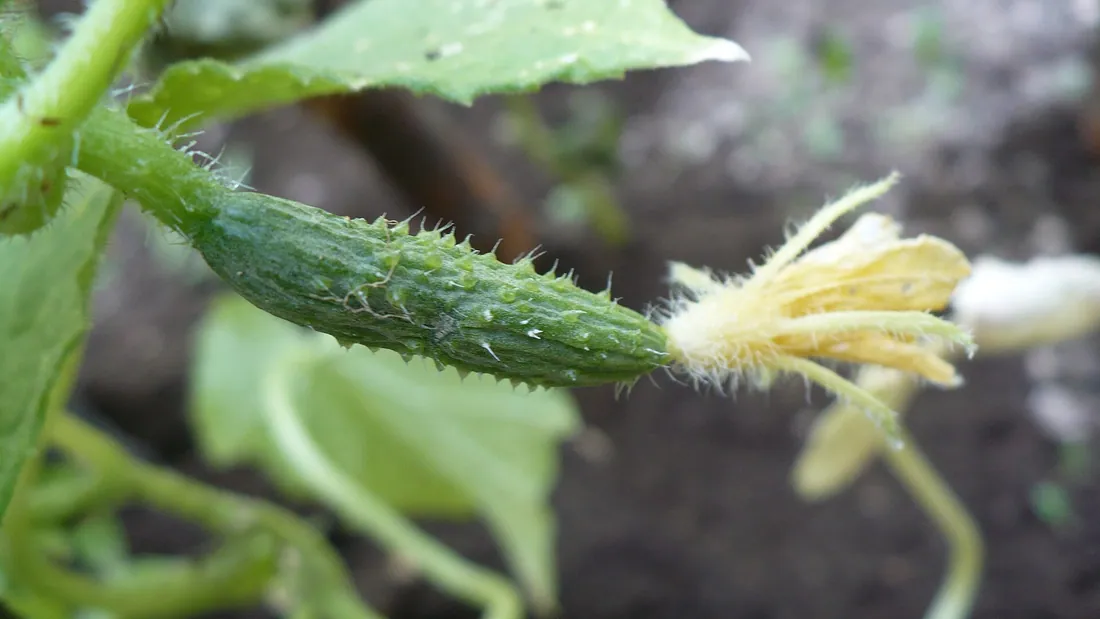

The cucumber (Cucumis sativus) is an annual vegetable from the warm regions of the southern Himalayas, and it shows: it demands heat and plenty of water. In a temperate climate it is a summer crop that tolerates no frost at all and starts slowly while the nights stay cool. It is sown warm in pots four to six weeks before the last expected frost, and only planted out once that risk has passed. Where summers are short or cool, a greenhouse or tunnel does far better than the open air.
Light and exposure
The cucumber wants full sun and a maximum of heat. Give it the warmest and brightest spot in the vegetable garden, sheltered from the wind that snaps the stems and chills the plants. It needs at least six to eight hours of sun a day to produce.
Where summers are short or cool, growing it under a greenhouse or tunnel makes all the difference: the heat missing in the open air is trapped there, and the plants stay sheltered from the damp that lingers in the evening. In open ground, reserve it a wall that catches the midday sun and gives back the heat stored during the night.
Watering
It is a heavy drinker. The soil must stay cool at all times, never drying out between two waterings. Water regularly and generously, always at the base of the plant and never on the foliage: leaves wet in the evening, in a damp late summer, call up powdery mildew for certain.
Consistency counts as much as quantity. A cucumber that suffers jolts, soil that dries then a big watering, produces bitter fruit. A mulch at the base keeps the moisture, limits evaporation and prevents the soil from drying out in strong heat.
Soil and repotting
The cucumber needs soil rich in humus, deep, cool but well drained. Work the earth by incorporating mature compost or well-rotted manure before planting: this crop is greedy and grows fast when it is fed. Poor soil gives puny plants and little fruit.
Plant once the last frosts have passed, when the soil has warmed, one plant every fifty to sixty centimetres. In a greenhouse or a pot, choose a container of at least thirty centimetres with good drainage at the bottom, and a rich compost with added compost.
Temperature and humidity
This is the critical point in any temperate climate. The cucumber grows well between 20 and 25 degrees and already suffers below 12 degrees: growth stops, the leaves yellow. It tolerates no frost and hates the cold nights at the start and end of the season.
Do not trust an early spring, late frosts still strike weeks after the first mild days, and one is enough. Sow warm indoors, between 20 and 25 degrees, and only put the plants out once that hurdle is past. In a greenhouse, the air humidity can climb quickly: ventilate during the hot hours to avoid the stuffy climate that favours disease.
Pruning and upkeep
Train the plants up a vertical support, a string, a mesh or a net. You gain space, the fruit stays clean and straight, and the air circulates better between the leaves, which limits disease. Tie the main stem as it climbs.
Harvest regularly and young, as soon as the fruit has reached a good size, without waiting for it to yellow. The more you pick, the more the plant produces: a fruit left to swell stops the formation of the next ones. Cut with secateurs rather than pulling, so as not to damage the stem.
Pests and diseases
Powdery mildew is enemy number one wherever summers turn damp. It is recognised by a white powdery felt on the upper side of the leaves, which end up drying out. It settles in quickly as soon as the nights cool and the humidity rises, typical of the end of the season. To delay it, water at the base in the morning, ventilate the plants and space them out.
As for pests, aphids colonise the underside of the leaves and weaken the young plants. In a greenhouse, watch out above all for red spider mites, which proliferate in hot, dry air and prick the foliage with fine yellow spots: a misting of clear water and good ventilation keep them at bay.
Propagation
Sowing is the only practical route. Sow warm indoors, between 20 and 25 degrees, four to six weeks before the last expected frost, two or three seeds per pot laid on their side at one centimetre deep. Emergence takes five to eight days. Keep only the most vigorous plant per pot.
Transplant without waiting too long, because the cucumber hates having its roots cramped. Harden off the young plants a few days before setting them out by putting them out during the mild hours, then plant outdoors or under a greenhouse once all risk of frost has gone. Handle the rootball with care, this plant tolerates having its roots disturbed poorly.
Climate and hardiness
Where and in which climate it thrives
The cucumber tolerates no frost at all, not even the lightest: it is a warm-season annual, grown in summer wherever winter exists and in the cool season wherever summer is scorching. It grows well between 20 and 25 degrees, already suffers below 15, stalls and yellows below 12, and its seed will not germinate below a soil temperature of 15 degrees. The planting cue is therefore thermal rather than calendar-based: outdoors when the soil reaches 15 degrees and nights no longer drop below 12, having sown warm four to six weeks earlier.
Under a mild but cool oceanic climate it sits at the edge of its comfort zone in the open air: slow start, an irregular crop from one year to the next, and powdery mildew as soon as the nights cool at the end of the season. That is where a greenhouse or tunnel changes everything, supplying the missing heat and keeping the foliage away from the evening damp. Under a continental climate with a hot summer it crops outdoors unaided, over a short but decisive season. In a Mediterranean or subtropical climate heat is no longer the problem: above 32 degrees fruit set falters and bitterness rises, so shade it lightly during the hottest hours, water without jolts, and shift the crop towards spring or autumn rather than the height of summer.
One last point holds at every latitude: stress, whether from cold or from thirst, is paid for in bitterness. A plant that has been chilled at night or left dry during the day concentrates cucurbitacins in its fruit, and nothing done afterwards will undo it.
Growing cucumber?
Green Hub keeps a dated history of your own plant: its photos, its progress, its repottings. An AI answers about yours specifically, not a generic sheet, for free.
Identify my plantMonth-by-month care calendar
| January | Nothing to do outdoors. Order the seeds and choose your varieties, from the long greenhouse cucumber to the crunchy gherkin. |
|---|---|
| February | Too early to sow without enough heat. Prepare pots, compost and, if you have one, clean the greenhouse. |
| March | Enrich the soil of the future spot with compost or well-rotted manure. Wait a little longer for the sowings. |
| April | First sowings warm indoors, between 20 and 25 degrees, in pots. Two or three seeds per pot, keep the finest plant. |
| May | Continue the sowings. Harden off the young plants. Plant outdoors or under a greenhouse only once the last frosts have passed. |
| June | Full growth. Train the stems up their support. Water regularly at the base and mulch to keep the coolness. |
| July | First harvests. Pick young and often to stimulate production. Water every day in strong heat, never on the foliage. |
| August | Full harvest. Watch for powdery mildew when the nights cool: ventilate, remove the affected leaves. In a greenhouse, look out for red spider mites. |
| September | Last harvests. Production slows with the cold nights. Keep picking the remaining fruit before it yellows. |
| October | End of season. Pull out the spent plants, empty the greenhouse and compost the healthy stems. |
| November | The cucumber is an annual, it does not come back. Clean the supports and spots, disinfect the greenhouse stakes. |
| December | Rest. Note the varieties that did well and, if you wish, keep the seeds of a fine fruit left to ripen. |
Green Hub tips
- Where the summer is short or cool, a greenhouse or tunnel changes everything: heat is what the cucumber lacks in the open air. Without a greenhouse, press it against a wall that catches the midday sun.
- Water regularly and at the base, never on the foliage. Watering jolts make the fruit bitter, and leaves wet in the evening call up powdery mildew.
- Train it up a vertical support: clean and straight fruit, saved space and better ventilation against disease.
- Pick young and often. A cucumber left to swell on the plant blocks the formation of the next ones.
Related species
Pumpkin
Cucurbita maxima
The pumpkin (Cucurbita maxima) is a large, sprawling, hungry and frost-tender squash that came from the Andes. It is a…
Zucchini
Cucurbita pepo
The zucchini (Cucurbita pepo) is the easy summer vegetable par excellence, one plant yields more than a family can eat.…
Artichoke
Cynara scolymus
The artichoke (Cynara scolymus) is a large perennial with silvery, deeply cut foliage, as striking in an ornamental…
Asparagus
Asparagus officinalis
Asparagus (Asparagus officinalis) is an unusual perennial for a vegetable patch: once established, an asparagus bed…
Bean
Phaseolus vulgaris
The green bean (Phaseolus vulgaris) is one of the easiest vegetables in the kitchen garden, provided you respect one…
Beetroot
Beta vulgaris
Beetroot (Beta vulgaris) is an easy root vegetable, one of the most forgiving in the kitchen garden. You sow it…
The guides that mention it
The vegetable garden calendar, from sowing to harvest
Two dates are enough to build an entire vegetable garden year: your last spring frost and your first autumn frost.…
Making Compost: Steering the Thermal Biology of the Heap
A compost heap is not a pile of waste you stir, it is a thermal process you steer. The real carbon/nitrogen ratio of…
Garden Mulching: Every Mulch Has an Effect and a Drawback
Mulching is presented everywhere as a benefit with no downside. There is one for every material: what nitrogen drawdown…
Garden Diseases: Recognising What Is Attacking Your Plants, and Acting Before the Spot Appears
A white bloom that wipes off on a fingertip, an angular lesion stopped dead by a vein, a fruit browned from the bottom…
Rainwater Harvesting for the Garden: Choosing and Sizing Your System
Rain barrel, above-ground tank, or underground cistern: how to choose the right size so your vegetable garden no longer…
Gardening Under a Greenhouse or Cold Frame: Growing All Year Round
A greenhouse or even a simple cold frame changes everything: sowings brought forward by several weeks, harvests…
Square Foot Gardening: Fitting More Crops Into Less Space
A twelve-inch grid and a well-placed trellis: how a square foot garden yields more vegetables than a traditional row on…
Sowing Seeds Successfully: Why It Fails, and What Fixes It
A seed that never comes up was not unlucky. Germination temperatures by species, correct depth, seeds that need light,…
Updated on
How this sheet is written
Written for Green Hub with the help of language models, then reviewed. It offers gardening guidance, not professional advice: if you are unsure whether a plant is toxic to a child or an animal, ask a vet, a doctor or your national poison centre.