Zucchini
Cucurbita pepo
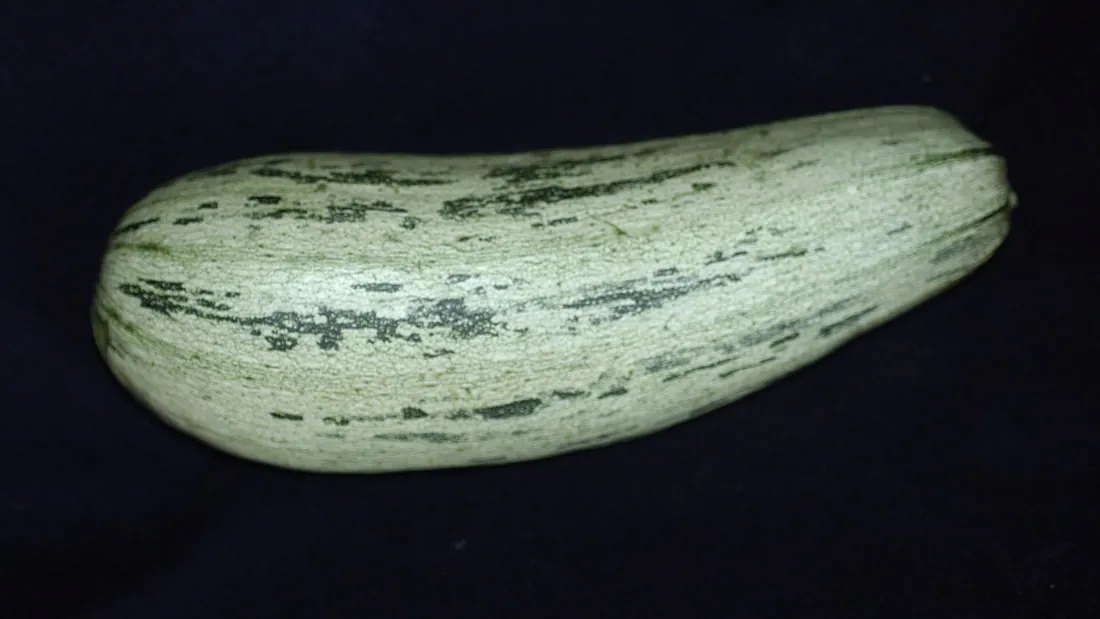

The zucchini (Cucurbita pepo) is the easy summer vegetable par excellence, one plant yields more than a family can eat. It is a hungry, frost-tender plant, born in the warm regions of Central America, that cannot withstand the slightest frost. Sow it under cover four to five weeks before the last expected frost, and plant it out only once those frosts have passed and the soil has warmed up. Its weak point in a temperate climate is powdery mildew, that white felt covering the leaves as soon as the nights turn cool at the end of the season.
Light and exposure
The zucchini wants full sun and warmth. Reserve an open spot for it, at least six to eight hours of direct sun a day, sheltered from cold prevailing winds. A corner near a wall that holds the heat suits it well where summers stay cool.
Give it room, because a plant spreads widely, often a square metre or more. A cramped plant is poorly ventilated, and foliage that does not dry quickly after rain catches powdery mildew more easily. Space the plants at least eighty centimetres to a metre apart.
Watering
The zucchini drinks a lot, especially in full production and in hot weather. Water generously and regularly, always at the base and never on the foliage. Foliage wet in the evening, in a damp summer, favours powdery mildew and rots.
A thick mulch at the base keeps the soil cool, limits watering and prevents the soil from splashing the lower leaves with each shower. If the young fruits turn yellow and rot at their tip instead of swelling, it is often a lack of regular water or poor pollination in cool weather.
Soil and repotting
It is a big feeder. It demands a deep, rich soil that holds moisture. Before planting, enrich the hole generously with mature compost or well-rotted manure. An old compost heap in fact makes an ideal growing medium for a zucchini.
The soil must stay cool but well drained, because the roots rot in waterlogged soil. In heavy, damp soil, planting on a small mound improves drainage and warms the roots.
Temperature and humidity
The zucchini only gets going in the warmth and tolerates no frost. It needs warmed soil, at least 12 degrees, to germinate and grow. Below 10 degrees, growth stops and the young plants take a hit.
This is the classic constraint of every temperate climate. Direct sowing in open ground is only feasible once the last frosts have passed and the soil is well warmed, otherwise the seeds rot before emerging. In cool spring weather, pollination goes badly and the first fruits abort, which is normal, production picks up again as soon as the warmth sets in.
Pruning and upkeep
The non-trailing zucchini is not really pruned, but a few old leaves in the centre can be removed during the season to air the heart of the plant and let the sun dry the foliage. It is a useful gesture against powdery mildew at the end of summer.
The real pruning here is the harvest. Pick the zucchini young, between fifteen and twenty centimetres, every two or three days in full season. The more you harvest, the more the plant produces. A forgotten zucchini that becomes a huge fruit exhausts the plant and slows the formation of the next ones.
Pests and diseases
Powdery mildew is the number one enemy of the zucchini in a temperate climate. It is recognised by a white powdery felt on the top of the leaves, appearing above all at the end of the season when the nights turn cool and the humidity rises. It weakens the plant without killing it outright, but reduces the harvest. Air the plants, water at the base and remove the most affected leaves.
Also watch out for slugs, which love the young plants in spring and can level a planting in a single night, as well as grey mould on the flowers and fruits in damp weather. Rot at the tip of young fruits is most often linked to poor pollination in cool weather rather than to a disease.
Propagation
Sowing is simple. Indoors, warm between 20 and 22 degrees, sow in pots four to five weeks before the last expected frost, one seed per pot laid on its edge two centimetres deep. Emergence is quick, often less than a week. Harden off the plants before putting them out.
Direct sowing in open ground is possible once the last frosts have passed, when the soil is well warmed. Sow two or three seeds per station and keep only the most vigorous plant. It is a crop that does not transplant willingly, so handle the root ball with care if you start from pots.
Toxicity
Shop-bought fruits are harmless, but a zucchini with a very bitter taste signals an excess of cucurbitacin, a toxic substance. If a fruit is frankly bitter, do not eat it and throw away the whole plant.
Climate and hardiness
Where and in which climate it thrives
The zucchini is a heat plant and completely frost-tender: zero degrees kills it in a single night, and below 10 degrees it simply stops growing. It therefore has no hardiness in the USDA sense; it is grown as an annual in every climate. What counts is soil temperature: at least 12 to 15 degrees to sow, otherwise the seeds rot before emerging, then a range of 18 to 30 degrees to produce at full tilt, sometimes a fruit a day.
In a temperate climate with a short summer, everything depends on the head start: sow under cover four to five weeks before the last expected frost, harden the plants off gradually, then plant out once those frosts have passed and the soil has warmed. That buys two to three weeks on a season that does not have many to spare. In a hot, dry climate the problem is reversed: above 35 degrees the pollen degrades, female flowers open without being fertilised and the little fruits shrivel. There you sow early to produce before the peak of the heat, or again at the end of summer, and give light shade during the harshest hours.
Powdery mildew is the end-of-season appointment everywhere the days stay warm while the nights turn cool and lay down dew. It is all but inevitable and largely cosmetic once the harvest is well advanced: you delay it by airing the plants, watering at the base and removing the whitened leaves. Where summers are mild and rarely very dry, red spider mites stay rare; in a hot, dry climate they become the main worry instead. Finally, a cool or rainy spring cuts pollination short: hand pollination early in the morning saves the first fruits.
Growing zucchini?
Green Hub keeps a dated history of your own plant: its photos, its progress, its repottings. An AI answers about yours specifically, not a generic sheet, for free.
Identify my plantMonth-by-month care calendar
| January | Nothing in the garden. Choose your varieties, non-trailing for a small vegetable plot, and order the seeds. |
|---|---|
| February | Patience. Too early to sow. Prepare pots and potting soil, and plan the spot by enriching the soil with compost. |
| March | Still too early in open ground. You can amend the soil and cover it to warm it up ahead of planting. |
| April | From mid-month, sow indoors in the warmth, one seed per pot. Emergence is quick. Keep everything under cover, it still frosts. |
| May | Harden off the plants in the open air. Planting in open ground and direct sowing only once the last frosts have passed and the soil has warmed. |
| June | Rapid growth. Mulch the base, water generously at the base. First flowers and first fruits at the end of the month. |
| July | Full production. Harvest the young zucchini every two or three days. Water regularly in hot weather. |
| August | The harvest is in full swing. Keep picking often. Air the heart of the plants and watch for the appearance of powdery mildew. |
| September | Powdery mildew sets in with the cool nights. Remove the whitened leaves, harvest the last fruits while the plant holds. |
| October | End of season. The first cold spells stop production. Pull up the plants and put the healthy foliage on the compost. |
| November | The vegetable plot rests. Amend the soil with compost and plan a rotation, the zucchini does not return to the same spot. |
| December | Review. Note the variety that best held up against powdery mildew, to choose it again next year. |
Green Hub tips
- A single plant feeds a whole household. Two are amply enough even to give some away, the zucchini produces without counting once it gets going.
- Harvest young and often, every two or three days. A forgotten fruit that becomes a giant exhausts the plant and blocks the next ones.
- At the end of summer, remove the old leaves from the centre to air it and let the sun dry the foliage: it is your best defence against powdery mildew.
- Plant on a small mound enriched with compost. In heavy, damp soil it warms the roots and prevents rot.
Related species
Cucumber
Cucumis sativus
The cucumber (Cucumis sativus) is an annual vegetable from the warm regions of the southern Himalayas, and it shows: it…
Pumpkin
Cucurbita maxima
The pumpkin (Cucurbita maxima) is a large, sprawling, hungry and frost-tender squash that came from the Andes. It is a…
Artichoke
Cynara scolymus
The artichoke (Cynara scolymus) is a large perennial with silvery, deeply cut foliage, as striking in an ornamental…
Asparagus
Asparagus officinalis
Asparagus (Asparagus officinalis) is an unusual perennial for a vegetable patch: once established, an asparagus bed…
Bean
Phaseolus vulgaris
The green bean (Phaseolus vulgaris) is one of the easiest vegetables in the kitchen garden, provided you respect one…
Beetroot
Beta vulgaris
Beetroot (Beta vulgaris) is an easy root vegetable, one of the most forgiving in the kitchen garden. You sow it…
The guides that mention it
The vegetable garden calendar, from sowing to harvest
Two dates are enough to build an entire vegetable garden year: your last spring frost and your first autumn frost.…
Watering Plants Properly: Deciding Rather Than Following a Schedule
Beginners water too often and too little at the same time. How to read the soil instead of the calendar, tell thirst…
Making Compost: Steering the Thermal Biology of the Heap
A compost heap is not a pile of waste you stir, it is a thermal process you steer. The real carbon/nitrogen ratio of…
Garden Mulching: Every Mulch Has an Effect and a Drawback
Mulching is presented everywhere as a benefit with no downside. There is one for every material: what nitrogen drawdown…
Garden Diseases: Recognising What Is Attacking Your Plants, and Acting Before the Spot Appears
A white bloom that wipes off on a fingertip, an angular lesion stopped dead by a vein, a fruit browned from the bottom…
Rainwater Harvesting for the Garden: Choosing and Sizing Your System
Rain barrel, above-ground tank, or underground cistern: how to choose the right size so your vegetable garden no longer…
Gardening Under a Greenhouse or Cold Frame: Growing All Year Round
A greenhouse or even a simple cold frame changes everything: sowings brought forward by several weeks, harvests…
Living soil: the no-dig method for a garden that thrives without a spade
Giving up digging means letting earthworms and mycorrhizae build a living soil that feeds the garden in your…
Updated on
How this sheet is written
Written for Green Hub with the help of language models, then reviewed. It offers gardening guidance, not professional advice: if you are unsure whether a plant is toxic to a child or an animal, ask a vet, a doctor or your national poison centre.